Have You Seen The New Wuthering Heights Movie?

On February 13, 2026, Emerald Fennell’s adaptation of Wuthering Heights was released in theaters, with Margot Robbie as Catherine and Jacob Elordi playing Heathcliff. It has already been a huge hit, exceeding expectations with $83 million in global revenue.
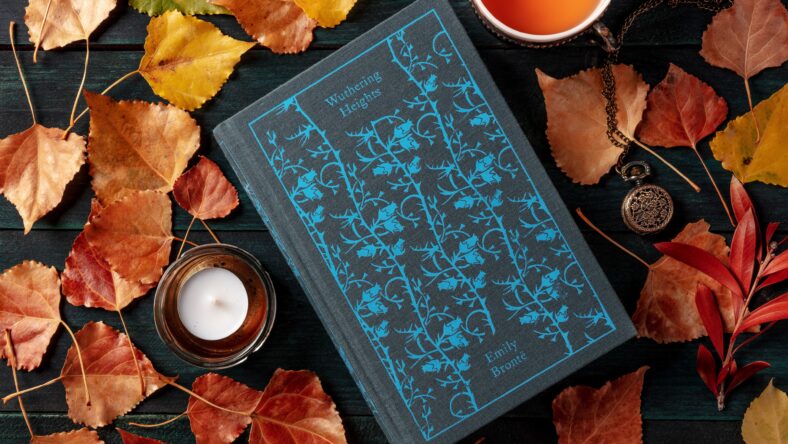
Wuthering Heights is the only novel written by Emily Brontë. It was published in 1847, and its harshness shocked readers at the time. Almost two centuries later, it is now considered a beloved classic of English literature.
The story takes place on the Yorkshire moors. It centers around Cathy, the daughter of a wealthy landowner who lives at the Wuthering Heights estate with her family, and Heathcliff, who was brought to the estate by Cathy’s father as a young orphan. Heathcliff was looked down upon because of his dark skin and lower-class status.
Here Are 7 Facts About The Book That Inspired The Movie

Cathy and Heathcliff become close and develop feelings for each other. After Cathy’s father dies, her brother starts abusing Heathcliff and treating him like a servant. She ends up marrying an affluent man instead.
Heathcliff vowed to seek revenge, left Wuthering Heights, and returned several years later as a prosperous gentleman. However, his violence and quest for vengeance negatively impact everyone he knows.
As you prepare to go see the latest Wuthering Heights film, here are seven facts about Wuthering Heights you may not have known.
1. Emily Brontë Grew Up On The Moors

She lived in Haworth, Yorkshire, with her siblings for most of her life. The back door of her father’s parsonage opened right onto the moors, so Emily was familiar with the rolling hills and low grass of the landscape.
The Yorkshire moors depicted in Wuthering Heights are the very same ones she and her siblings wandered when they were young.
2. Wuthering Heights Is More Tragedy Than Romance

People tend to think of Wuthering Heights as a romance, but it is not a typical love story and is really more of a Gothic novel. It has a lot of dark themes. For instance, Heathcliff is obsessive and abusive.
He has a disturbing and unhealthy relationship with Cathy, even going so far as to break the side of her coffin so they can decompose together when he dies.
3. Wuthering Heights Was Self-Published
Both Emily and her sister, Anne, were rejected by publishers, so they paid 50 pounds to publish Wuthering Heights and Anne’s novel, Agnes Grey, together.
They also used male pseudonyms because female writers were not respected during their era. Emily was Ellis Bell, and Anne was Acton Bell.
4. The Character, Hindley Earnshaw, Was Similar To Branwell

Branwell was one of Emily’s siblings, and they were living in the same house while Emily was writing the novel. Branwell was struggling with alcohol and opium addiction and got worse after his affair with a married woman ended.
In Wuthering Heights, Cathy’s brother, Hindley Earnshaw, succumbed to alcoholism after his wife Frances passed away.
5. Emily Brontë Died Thinking Wuthering Heights Was A Failure

At first, Victorian critics were baffled by the violence in Wuthering Heights, which came out in December 1847. Some reviewers admired its creativity, while many others were sickened by its cruelty.
A year later, in December 1848, Emily died of tuberculosis at the age of 30, never knowing how much of a success her book would become.
6. Charlotte Brontë Defended Her Sister’s Reputation
Worried about the social consequences that the backlash might bring, Charlotte worked hard to defend her sister’s reputation. In 1850, she released a revised edition of Wuthering Heights.
She addressed the criticisms of Emily by saying that she had a rural upbringing and didn’t know what she was doing when writing. Apparently, her gift of creativity had been wild and untamed.
7. Wuthering Heights Has Been Adapted Many Times
First, there was a silent film from 1920 that has since been lost. A 1939 version stars Laurence Olivier and Merle Oberon; a 1992 version stars Sinead O’Connor as Emily, and a 2011 film features James Howson and Kaya Scodelario.

By Emily Chan
Emily Chan is a writer who covers lifestyle and news content. She graduated from Michigan State University with a degree in... More about Emily Chan