Ever glanced at your garden and sighed at the sight of weeds sprawling across your neatly plotted vegetables and flowers?
What if, instead of seeing them as a nuisance, you could view some of these invaders as a secret pantry staple?
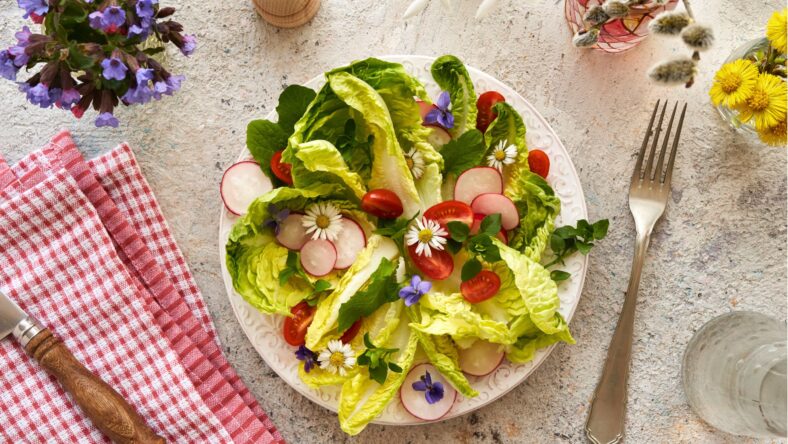
Many common weeds and invasive plants are not only edible but also downright delicious. So, before you reach for the weed killer, consider this: your next meal could be growing right between your carrots and petunias.
Dandelions
First up are dandelions, which originate from Europe and have become one of the most widespread plants worldwide.
They’re easily recognized by their bright yellow flowers, jagged leaves, and unmistakable puffball seed heads. But did you know every single part of this plant is also edible?
Dandelion greens have a slightly bitter, earthy flavor, making them perfect for salads or sautéed as a side. The flowers can be used to make delightful syrup or wine, too.
Chickweed
This small, star-shaped flower hails from Europe but has made itself at home globally.
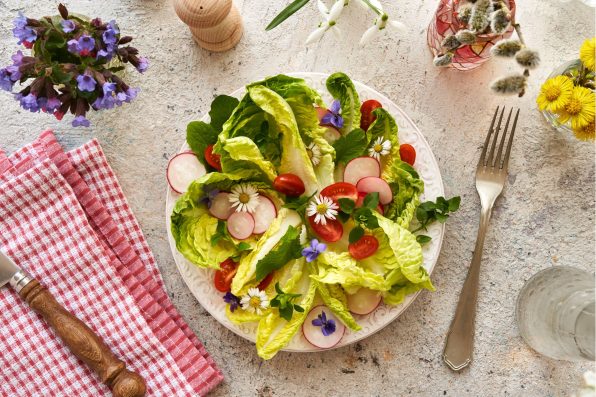
Chickweed has a mild, slightly grassy taste, similar to spinach. It tastes fantastic raw in salads or sandwiches and can be cooked like spinach as well.
Just keep in mind that it wilts quickly when heated. So, you should add it at the end of your cooking.
Japanese Honeysuckle
This invasive vine, with its sweet-smelling white flowers, is native to East Asia. The blossoms of Japanese honeysuckle can also be eaten directly off the vine or used to make a fragrant syrup or tea.
Their flavor is sweet and floral, a perfect addition to desserts or drinks. Just be cautious not to consume the berries, as they can be toxic.
Lambsquarters
Often called wild spinach, lambsquarters are highly nutritious and have a flavor profile similar to spinach but with a hint more earthiness.
Originating in Europe, it now grows in many parts of the world, and you can use it as you would spinach– because it’s great both raw and cooked. Just make sure to harvest the young, tender leaves for the best flavor.
Wild Fennel
Wild fennel, which dots roadsides and open fields, is native to the Mediterranean but has become naturalized in many parts of the world.
It has a sweet, anise-like flavor. So, the fronds can be used fresh in salads, while the seeds are great for seasoning meats and breads. Even the bulb can be sautéed or grilled.
Burdock
Burdock, a staple in Japanese cuisine known as gobo, is recognizable by its broad leaves and burr-seed heads that stick to everything.
Its roots are earthy and sweet, similar to a cross between a potato and an artichoke. That’s why it tastes delicious pickled, stir-fried, or even made into chips.
Red Clover
Native to Europe, Asia, and Africa, red clover has globe-shaped, pink flowers and is often found in meadows.
The flowers and young leaves can be eaten raw or steeped to make a sweet, grassy tea. They’re also known for their health benefits, including blood purification.
Daylily
Daylilies, not to be confused with other types of lilies that can be toxic, are edible from their tuberous roots to their flowers.
Their taste varies from slightly sweet to a mild vegetable flavor, similar to asparagus or zucchini. The flowers can also be stuffed, fried, or added to salads for a colorful touch.
Chicory
Last but not least, chicory is a blue-flowered plant that’s native to Europe but found widely in North America. When roasted and ground, its roots offer a coffee substitute, while the leaves can be bitter and are best when young and tender. They’re also great in salads or as a cooked green.
Sign up for Chip Chick’s newsletter and get stories like this delivered to your inbox.

By Katharina Buczek
Katharina Buczek graduated from Stony Brook University with a degree in Journalism and a minor in Digital Arts. Specializing in... More about Katharina Buczek