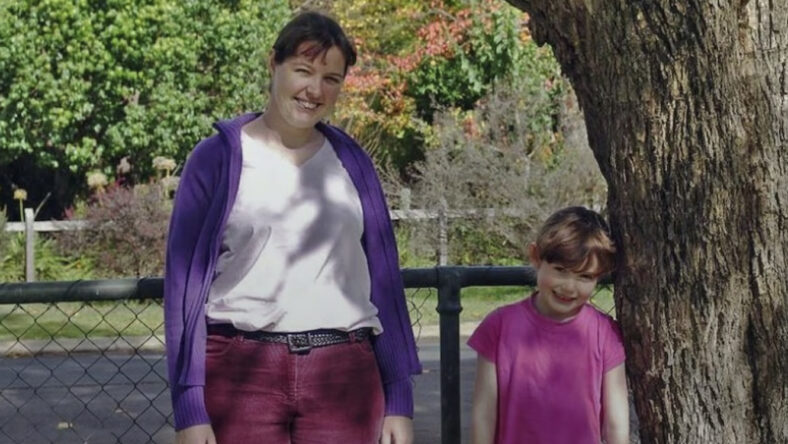
Catherine Corless was raised on a farm just a few miles away from the Bon Secours Mother and Baby Home in Tuam, Ireland. As a child, she didn’t know much about the institution; she and other kids were simply told by nuns not to “mix” with the children there, who “carried disease.”
It took Catherine five more decades, and an invitation to contribute a piece to the 2012 edition of a local historical society, for her to dig deeper into the home.
After the amateur historian was given that assignment, memories of those children “flashed” through her mind, and she began investigating.
In the end, her work revealed that nearly 800 babies had died at the home. Yet, many of those deaths weren’t properly recorded, and Catherine tried to raise the alarm about a potential mass grave in the “holy city” of Tuam.
Unfortunately, her discovery was written off at first, and she was accused of “giving Tuam a bad name.”
Now, over a decade later, forensic excavation has finally commenced at the site and confirmed Catherine’s findings. According to a recent release from the Office of the Director of Authorised Intervention, Tuam (ODAIT), seven sets of infant remains were found at the property, specifically in an underground vaulted structure that was once a sewage system.
The Bon Secours Mother and Baby Home has a long, varied history, serving as a “workhouse” for the poor, who were given food and shelter in exchange for labor, from 1841 to 1918. Then, until 1925, it was used as a military barracks. Finally, the Bon Secours Mother and Baby Home took over, lasting until 1961.
Like other similar institutions in Ireland, it was run under Catholic orders and housed unwed pregnant women. There, they gave birth, and the numerous infants who died on the property weren’t recorded or even buried alone.
“The information I gathered from the maps and records I discovered was distressing. A high number of babies and young children had died before the home was closed in 1961, but there were no burial records,” Catherine recalled in a June 2025 personal essay.
Sign up for Chip Chick’s newsletter and get stories like this delivered to your inbox.
“In the 1970s, two boys had found bones in an exposed part of a sewage tank in the grounds. Authorities suggested they were related to a workhouse once on the site. I believed it indicated there was evidence that the babies might have been buried in a mass grave.”
When Catherine initially published her research, her death record tally had reached 200 babies. Over the course of her subsequent research, that number climbed to a total of 796 babies and toddlers, all who’d passed away at the institution between 1925 and 1961.
“All had been baptized, but the church and the authorities involved denied knowledge of their deaths or burials. The Bon Secours sisters hired a PR company that denied the existence of a mass grave and claimed the bones were from the famine. My research was publicly ridiculed,” she recalled.
Nonetheless, Catherine kept fighting to be heard, and after Irish news outlets began picking up her research in 2014, there was no turning back.
The following year, the Irish government initiated an investigation into some of the largest mother and baby houses in the country. Then, by 2016, an initial excavation revealed “significant quantities of human remains” were recovered from the Tuam home.
Once the government’s report was released in 2021, all involved institutions formally apologized and promised to excavate the Bon Secours Mother and Baby Home.
This officially began on July 14, 2025, per the ODAIT, and has involved the work of forensic archaeologists, osteoarchaeologists, forensic anthropologists, a forensic evidence manager, and a forensic photographer.
“ODAIT will provide updates first to families and survivors and to the media and wider public on a monthly or bi-monthly basis,” said the office’s latest technical update shared on November 7.
It will reportedly take several months to determine the age of the seven sets of infant remains. It also remains unclear how many children may be found on the grounds.
Other excavation findings thus far have included personal belongings, such as a historic Bovril jar and a historic razor.
“It’s a very challenging process. Really, a world first,” explained Daniel MacSweeney, who’s heading the operation.
According to MacSweeney, the fact that the infant remains are “absolutely tiny” means they must work with utmost caution.
“We need to recover the remains very, very carefully to maximize the possibility of identification.”
The excavation is currently projected to take approximately two years. In the meantime, the Bon Secours Sisters have stated they “did not live up to our Christianity” and made a $15 million contribution to a state compensation fund for mother and baby institution survivors, as well as contributed nearly $3 million to the excavation.
As for Catherine, she called her pursuit of truth a “fierce battle” and is glad that people are finally “righting the wrongs.”
“When I started this, nobody wanted to listen. At last, we are righting the wrongs. I was just begging: take the babies out of this sewage system and give them the decent Christian burial that they were denied,” she said.

By Katharina Buczek
Katharina Buczek graduated from Stony Brook University with a degree in Journalism and a minor in Digital Arts. Specializing in... More about Katharina Buczek