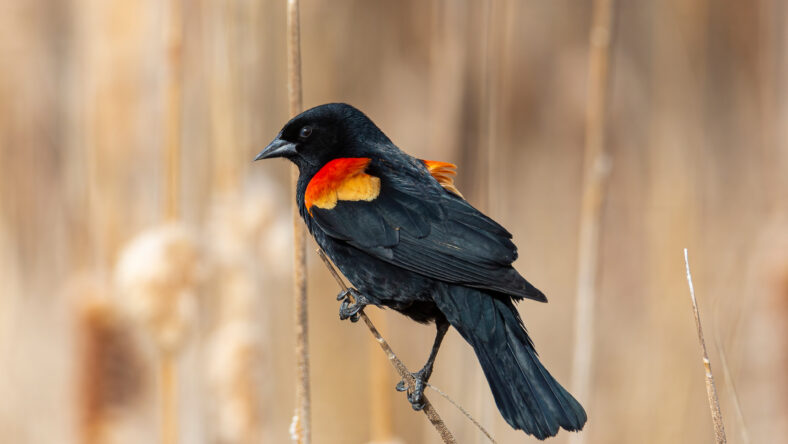
In North America, bird populations are declining at rapid rates in three specific locations. Between 1987 and 2021, wild bird numbers have fallen in California, the Midwest, and the Mid-Atlantic.
Their decline is associated with intense agriculture. Additionally, declines were more severe in warming areas, indicating that rising temperatures due to climate change are a contributing factor to the losses.
Birds play an important role in our ecosystem. They spread seeds so plants can grow and help control insect populations. Researchers are most concerned about the acceleration of bird decline in North America since the 1980s.
“We are not talking about the decline but the acceleration of the decline,” said Francois Leroy, the lead author of the study and a postdoctoral researcher in macroecology at Ohio State University.
“We see that this decline is getting faster and faster with the intensification of human activities.”
The research team examined data from the North American Breeding Bird Survey, an annual survey conducted by professional biologists and skilled amateurs.
It keeps track of bird populations across North America. The survey involves walking along certain routes and recording the birds that are present.
The team mapped bird decline over a period of 35 years by looking at specific routes in the United States. Overall, bird populations dropped by at least 15%. The most significant drops were recorded in 122 of 261 bird species.
Accelerated declines were documented in 63 species. Native species like house finches, red-winged blackbirds, and American crows were found to have experienced an accelerated decline.
Sign up for Chip Chick’s newsletter and get stories like this delivered to your inbox.
The researchers looked at potential contributing factors to the losses, including rainfall levels, shifts in temperature, and land-cover changes.
The acceleration of bird decline correlated with high usage of pesticides and fertilizers in large areas of cropland. This is considered to be a sign of intense agriculture.
The amount of farmland in the U.S. hasn’t changed much since the 1980s. Changes in farming practices are more likely to be driving bird losses. It is unclear exactly which agricultural practice is the worst for bird losses, but pesticide use is thought to be one of the main culprits.
Most declining bird species depend on insects for food. The use of pesticides is killing off their food source. Birds also ingest pesticides directly.
Furthermore, intense agriculture warms landscapes, which impacts birds.
On the whole, the study adds to a growing body of evidence that birds are not doing well. The health of birds is often an indicator of how other species are doing. If the birds aren’t okay, that means other species are probably suffering, too.
Scientists are still figuring out what the decline of birds means for humans and the state of our planet.
The findings of the study were published in the journal Science.

By Emily Chan
Emily Chan is a writer who covers lifestyle and news content. She graduated from Michigan State University with a degree in... More about Emily Chan