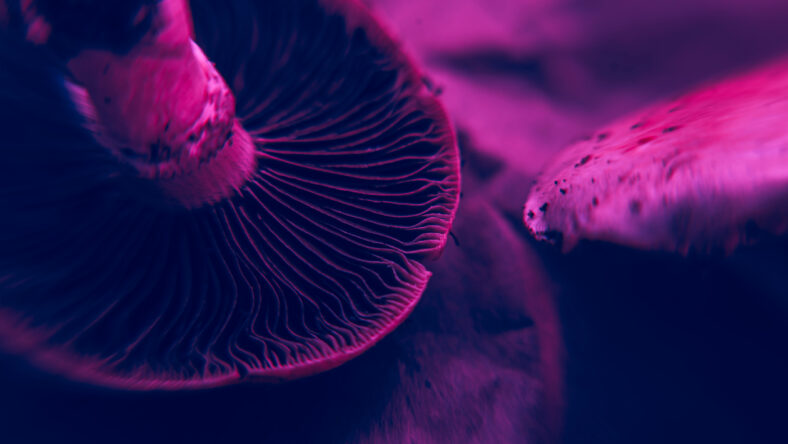
Researchers in South Africa have found two new species of psychedelic mushrooms that belong to the genus Psilocybe. These types of mushrooms are known for producing the mind-altering compound psilocybin.
The discovery is helping to improve the understanding of how the mushrooms were used by indigenous healers.
The new species, Psilocybe ingeli and Psilocybe maluti, were discovered in South Africa and Lesotho. P. ingeli was unearthed in the KwaZulu-Natal province. It grows in grass fertilized by cow dung, and it is named after the nearby Ingeli mountain range.
P. maluti was found in South Africa’s Free State province and the Kingdom of Lesotho. It also grows on cow manure and is named for the Maluti Mountains of the region. P. maluti is unlike typical mushrooms.
Instead of having open caps that release spores into the air, its caps remain closed during all phases of its life span. As a result, the mushroom likely depends on animals to spread its spores.
Traditional healers in Lesotho, or “lingaka,” have been using P. maluti in spiritual practices. The mushroom is combined with a plant called Boophone disticha to create a concoction that causes hallucinations.
The brew is known as “seipone sa koae-ea-lekhoaba.” After patients consume the brew, they describe their visions to healers, who interpret them.
The discovery represents one of the first recorded cases of hallucinogenic mushrooms being used in traditional African medicine. In places like Mexico, the traditional use of psychedelic mushrooms has been well-known, but until now, evidence of their traditional use in Africa has been almost non-existent.
“These two species were sent to me by citizen scientists. It would be impossible for a single researcher to cover a fraction of an area these mushroom enthusiasts have access to. This is the only way we will be able to further studies in African mycology,” said Breyten van der Merwe, a researcher at Stellenbosch University.

A combination of structural and DNA analyses were performed in order to confirm the mushrooms were new species.
The researchers carefully examined the mushrooms’ physical features under powerful microscopes. Then, they sequenced certain regions of DNA to compare them with known Psilocybe species.
The study also mentions the role of birds in dispersing the spores of P. maluti. The mushroom’s indigenous name, koae-ea-lekhoaba, translates to “powdered tobacco of the crow.” This suggests a link between the mushrooms and the bird species in the area.
More research is needed to learn about the connection, but it could change scientists’ understanding of how fungi spread and interact with their surroundings.
The research highlights the importance of exploring fungal diversity, particularly in understudied regions like Africa.
As therapeutic uses of psilocybin become more popular, further investigations into psychedelic mushrooms will be very informative and worthwhile.
The study was published in the journal Mycologia.
Sign up for Chip Chick’s newsletter and get stories like this delivered to your inbox.

By Emily Chan
Emily Chan is a writer who covers lifestyle and news content. She graduated from Michigan State University with a degree in... More about Emily Chan