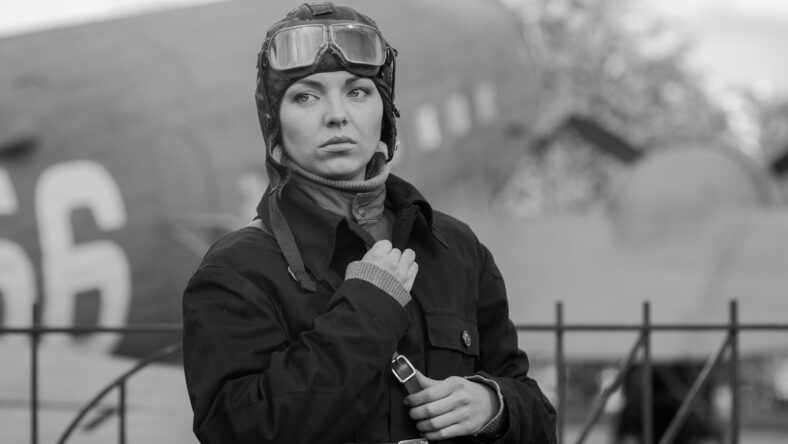
During World War II, a group of female pilots called the Soviet Night Witches bombed Nazis after nightfall. Although rarely any mention of them is made in history books, they played a significant role in the Soviets winning World War II.
They flew rickety plywood biplanes under the cover of darkness, dodging bullets and staving off frostbite in the frigid night air. Overall, the 588th Night Bomber Regiment dropped more than 23,000 bombs on Nazi targets.
The Germans despised them and gave them the nickname of Nachthexen, or “Night Witches.” The wooden planes they flew made whooshing noises as they soared overhead, which resembled the sound of a sweeping broom.
The planes were too small to show up on radar or infrared locators, so that sound was the only warning that the Germans had. Any German airman who shot down the Night Witches was awarded the prestigious Iron Cross medal.
The idea of an all-female squadron was not welcomed at first, but as the enemy pressed on, Soviet leaders began to rethink it. In June 1941, Adolf Hitler launched Operation Barbarossa, and the Soviets were desperate to fight off the Nazis.
On June 28, 1942, the 588th embarked on their first mission. They aimed at the headquarters of the invading Nazi forces, proving themselves to be successful and deadly.
The 588th was formed after Marina Raskova, who was famous for being the first female navigator in the Soviet Air Force, convinced Soviet leader Joseph Stalin to let her create an all-female fighting squadron. Stalin agreed and issued orders to deploy three all-female air force units, including the 588th.
This made the Soviet Union the first nation to officially allow women in combat. The 588th flew night bombing missions, while the 586th provided air cover for troops, and the 587th flew twin-engine Pe-2 dive bombers.
The military was ill-prepared for women pilots. They had to wear hand-me-downs from male soldiers, so their uniforms and boots were too big.

Sign up for Chip Chick’s newsletter and get stories like this delivered to your inbox.
The male military personnel also did not like women being on the front lines because they believed it was a man’s job. Not only did the women have to face harsh conditions, but they also experienced harassment and negative attitudes from the men.
The planes that the female pilots flew could only carry two bombs at a time, which meant they had to fly out multiple times to have an effect on the German front lines.
They also had to fly at lower altitudes due to the weight of the bombs, making them easier targets. That’s why they needed to do night missions.
The Night Witches’ last flight took place on May 4, 1945. Germany officially surrendered three days later. It’s unclear how many Night Witches were lost during the war. It is estimated that about one-third were killed in action.
These heroines were the most highly decorated unit in the Soviet Air Force. Yet, they were not included in the big victory parade in Moscow because their old planes were too slow. Their regiment was also disbanded six months after the end of World War II.
The story of the Night Witches has been largely ignored throughout history, but in the past few decades, more historians are spreading the word about these daring female flyers.

By Emily Chan
Emily Chan is a writer who covers lifestyle and news content. She graduated from Michigan State University with a degree in... More about Emily Chan