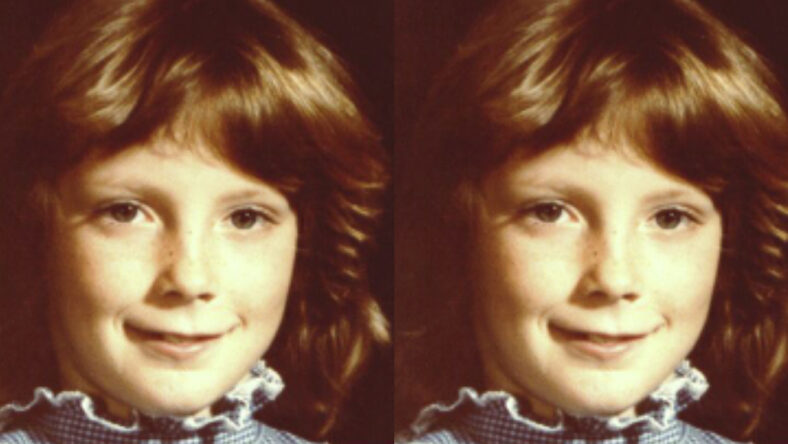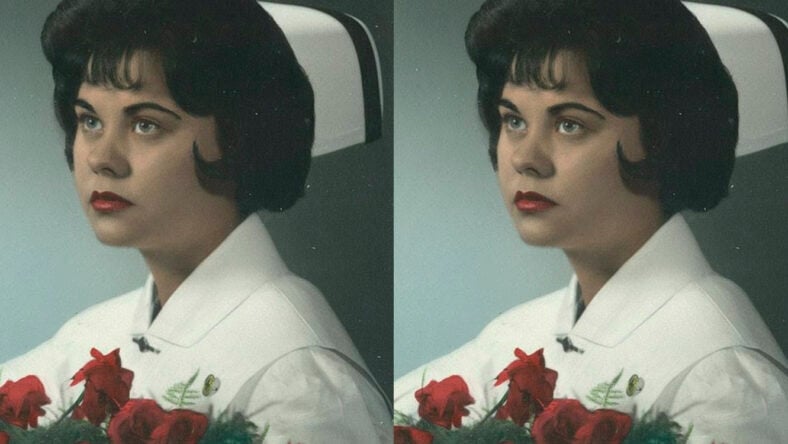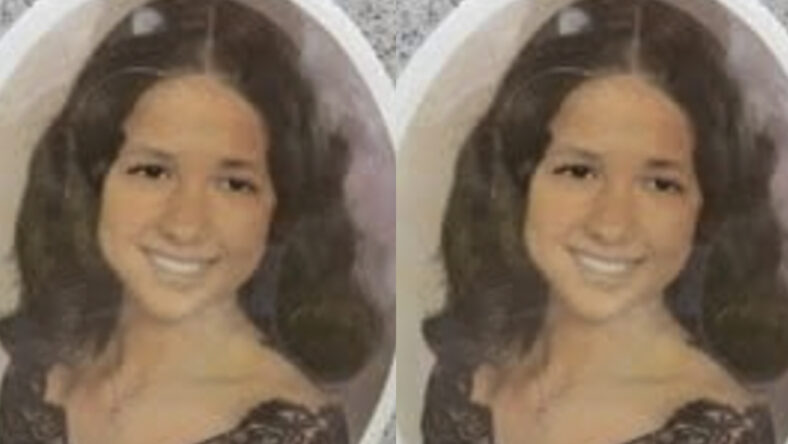
In October, a new true crime limited series entitled “The Monster of Florence” hit Netflix, inspired by the gruesome tale of Italy’s first serial killer.
From 1968 to 1985, a total of eight young couples were murdered in secluded regions of the picturesque city, and to this day, the identity of their killer remains unknown.
Each slaying was tied together by a few key details. The so-called Monster of Florence would strike at night, on moonless evenings, and used the same weapon, a .22 caliber Beretta pistol, in each murder.
His first victims included Barbara Locci, a 32-year-old wife, and Antonio Lo Bianco, her 29-year-old lover. In August 1968, they were shot and killed in a car while Antonio’s son was asleep in the back seat.
Initially, investigators set their sights on Barbara’s husband, Stefano, and he was actually convicted of the double homicide. Yet, years later, evidence from that first case began to match up with evidence from fresh killings that took place while Stefano was still behind bars.
This prompted him to be released, and the police to start considering the possibility of a serial killer.
Pasquale Gentilcore and Stefania Pettini, a teenage couple, were next. They’d parked Pasquale’s car in a remote area, likely to get some privacy, and were both shot and stabbed to death in September 1974.
Then came the murder of Carmela De Nuccio and her fiancé, Giovanni Foggi, in June 1981. Like the teens, they were shot and stabbed either in or near their car.
And that same year, a married couple, Stefano Baldi and Susanna Cambi, suffered the same fate.
Sign up for Chip Chick’s newsletter and get stories like this delivered to your inbox.
In both of those 1981 cases, the corpses of females Carmela and Susanna were mutilated afterward, with a private region being removed from their bodies.
It was in the wake of these tragic double homicides that investigators realized the same firearm had been used in the 1974 killings of teens Pasquale and Stefania, sending shockwaves through the city of Florence.
Nonetheless, the heinous crimes continued. Paolo Mainardi and Antonella Migliorini fell victim to the Monster of Florence in June 1982, followed by two German students, Wilhelm Friedrich Horst Meye and Uwe Rüsch, in September 1983.
However, in the latter case, the students were actually both males, and authorities suspect the serial killer might have mistaken Uwe for a woman since he had long hair.
The final two murders came a couple of years later. First, 21-year-old Claudio Stefanacci and 18-year-old Pia Gilda Rontini were murdered in their car in July 1984.
Next were the shooting and stabbing deaths of Jean Michel Kraveichvili and Nadine Mauriot in September 1985. In both of the last cases, the females’ bodies were, again, mutilated.
The victims’ backgrounds were varied, with some being locals while others were tourists. But other glaring links between the cases remained: all the victims were couples murdered in a similar way while meeting up in cars in isolated areas, typically on weekends.
Pietro Pacciani, a farmer who’d formerly spent 13 years behind bars for murder and previously been convicted of abusing his daughters, eventually became a top suspect during the 1990s. Investigators believed he’d been helped by three friends, and he was even convicted of the murders in 1994.
Yet Pietro’s attorney managed to secure an acquittal, arguing that the evidence against his client was insufficient and that the investigative work had been subpar. He was released in 1996 and subsequently died due to a heart attack in 1998, before a retrial could be conducted.
In the wake of Pietro’s death, two of his friends and alleged accomplices, Mario Vanni and Giancarlo Lotti, were convicted of four of the double homicides in 1998.
They ultimately died while in prison, and today, many continue to question whether they were truly responsible, as no evidence actually links them to all of the murders.
More recently, the investigation was reopened in 2001, since new evidence supposedly suggested a Satanic sect had committed the crimes as ritual killings.
Mario Spezi, an Italian journalist, was outspoken in his disagreement with such a theory and published articles pushing back against the hunch. Additionally, he teamed up with Douglas Preston, the mystery author who penned “The Monster of Florence.”
Mario’s home soon became the target of multiple police searches. Then, he was arrested in 2006 on allegations of prosecutorial defamation and obstruction of an investigation. The police even accused Mario of playing a part in the murders.
According to Douglas, while being questioned by investigators, he was allegedly pressured to confess to aiding Mario in the planting of evidence. Douglas never gave in, and in the end, Mario’s charges were dropped.
And now, over 57 years since the very first double homicide occurred, the unknown identity of The Monster of Florence continues to both captivate and terrify the world at large.
Despite all the similarities between the cases, speculation about the killer and their potential motives has run rampant and spawned numerous theories.
That’s why Stefano Sollima, who directed the latest Netflix limited series, sought to share the tale impartially.
“We wanted to tell the story of the Monster without taking a position. Instead of focusing on the investigation, we kept it in the background and decided to focus on the individual suspects who, in each episode or case, were considered by the investigators to be the culprits,” he explained.
Moreover, if viewers leave with one takeaway from the project, Stefano hopes it’s a better understanding of Italy’s complicated history.
“The country being represented in this period of time is very different from what we might imagine Italy of the ’60s or ’70s to be. It was much more backward culturally, a peasant and patriarchal society,” he noted.
“The violence against women still exists and is present today. The cultural environment in which that violence was perpetrated and cultivated has taken on different features, but it is still present today. So this story can be considered, in my opinion, still very relevant, still very topical, still very contemporary.”

By Katharina Buczek
Katharina Buczek graduated from Stony Brook University with a degree in Journalism and a minor in Digital Arts. Specializing in... More about Katharina Buczek