More than 5,300 years ago, Ötzi the Iceman was killed by an arrow in the back while traversing across the Alps on the border of Austria and Italy.
His body remained frozen in the ice until 1991, when two German hikers stumbled across his mummified corpse in the northern Italian region of South Tyrol.
At the time of his death, Ötzi was approximately five feet and three inches tall, and he was in his forties. Since his discovery, Ötzi’s remains have been kept at a steady temperature of minus six degrees Celsius (21 degrees Fahrenheit).
Scientists have been examining his body to learn more about ancient human life. When they inspected his stomach, they saw that he had eaten wheat, red deer, and ibex just before his death.
He was in good physical condition and was carrying various weapons, including a copper ax, a dagger, a longbow, arrows, and a quiver.
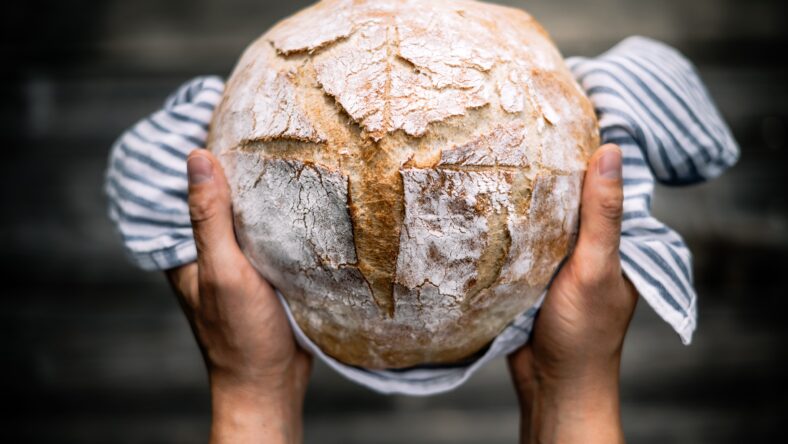
A new study has also revealed active microbial life—both ancient and modern—in his frozen body. The yeast strains were found on Ötzi’s skin and stomach. They are adapted to cold environments, and some may even be used to make sourdough bread.
“What we didn’t expect to find was yeast,” said Mohamed Sarhan, the lead author of the study from the Eurac Research Institute in Bolzano, Italy.
“His body hosts living, metabolically capable organisms that are actively responding to their environment. The cold-adapted yeasts are growing. Certain bacteria have colonized and persisted across his tissues for decades.”
In 2019, researchers began analyzing swab and water samples of Ötzi’s internal and external microbiome to determine whether any microbes were able to grow under the current storage conditions. Additionally, they studied his refrigeration chamber and the soil from the site where he was found.
Sign up for Chip Chick’s newsletter and get stories like this delivered to your inbox.
Once the research team discovered which microbes were present, they then identified four different yeasts that can survive sub-zero temperatures in Ötzi’s guts, skin, and the water that melted off his body when he was partially thawed. These types of yeast only live in cold conditions and probably entered Ötzi’s body soon after his death.
“These yeasts have accompanied Ötzi on his long journey through the millennia,” said Frank Maixner, a co-author of the study and director of the Eurac Research Institute for Mummy Studies.
The scientists reproduced the gut yeast in a refrigerator and attempted to make a loaf of sourdough. At first, it didn’t work, but they were successful after three months of effort. They have also considered the possibility of using the yeast to brew beer.
Furthermore, the yeast was capable of eating a chemical called phenol, which means that it could help break it down in contaminated environments. More research needs to be done to figure out if the yeast is harming the mummy at all.
The study was published in the journal Microbiome.

By Emily Chan
Emily Chan is a writer who covers lifestyle and news content. She graduated from Michigan State University with a degree in... More about Emily Chan