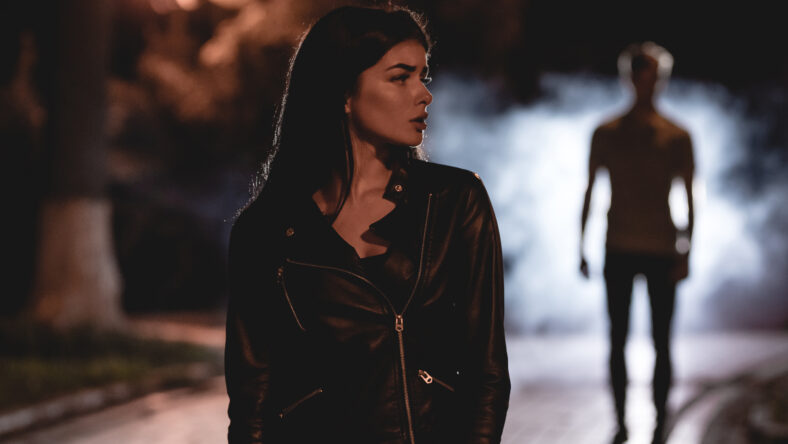
A new survey has revealed that nearly one-third of adults are still scared of the dark. Whether it’s creaky floorboards or mysterious shadows, it seems some childhood fears never really go away—they just grow up with us.
Between September 17 and September 22, around 2,000 American adults were surveyed. The study also showed that one in 10 adults continues to sleep with a stuffed animal or comfort item at night, while the same number sleep with the lights on.
A quarter of the surveyed adults also sleep with a nightlight. Men were two times as likely to sleep with the lights fully on than women, at 15% versus 7%. Overall, slightly higher rates of men than women reported a fear of the dark, at 33% compared to 26%.
The fear of darkness is called nyctophobia, and it can be traced back to ancient times. During nighttime hours, our ancestors faced danger because it was harder to spot predators. Modern adults don’t really have too much to fear in the dark, but that ancient fear response still exists.
“With everything in October’s ‘spooky season,’ from horror movies to haunted houses and other Halloween celebrations,) it’s no wonder that some Americans aren’t sleeping as well this month,” said Laura Scott, the director of brand marketing at Avocado Green Mattress, the company that commissioned the research.
“People may be staying up later to celebrate in the weeks leading up to Halloween, and especially if they’re watching horror movies, our data shows their sleep may suffer as a result.”
Even though more men claim to enjoy watching horror movies than women (33% versus 24%), men’s sleep suffers worse consequences afterward.
Almost a quarter of men reported having nightmares after horror films, compared to only 13% of women. Women tended to feel scared during and immediately after watching horror films, but the effect seemed to be delayed in men.
Horror movies disrupt sleep in other ways besides nightmares. After watching horror content, 28% of respondents had a greater likelihood of waking up during the night, while 22% experienced lower-quality sleep, and 12% had fewer hours of sleep.
Sign up for Chip Chick’s newsletter and get stories like this delivered to your inbox.
Furthermore, the end of Daylight Saving Time is coming up on November 2, which won’t help with sleep troubles. According to the survey, people were confused about how the time change worked.
Nearly one-third incorrectly thought that they would lose an hour of sleep when they would actually gain one, and 13% were just unsure which direction the clock moved altogether.
A large majority (62%) said they would get rid of the time change if they could. About 20% of respondents said it would take more than a week for them to adjust to the time change.
It’s important to practice healthy sleep habits in the days leading up to the time change, so the adjustment won’t be so hard on your body.
The study was conducted by Talker Research on behalf of Avocado Green Mattress.

By Emily Chan
Emily Chan is a writer who covers lifestyle and news content. She graduated from Michigan State University with a degree in... More about Emily Chan