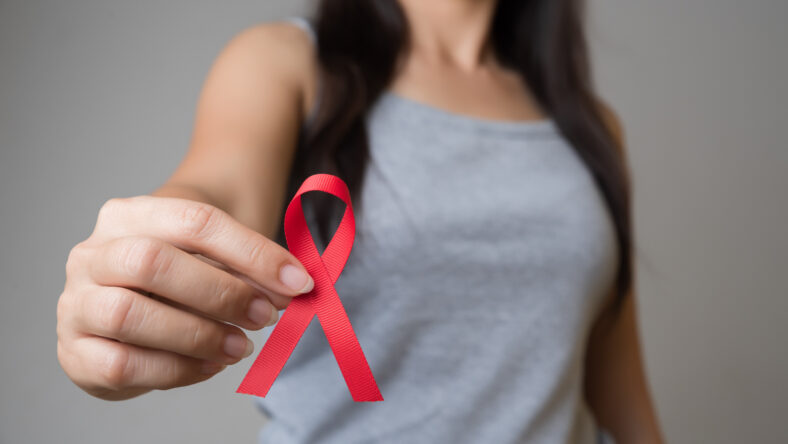
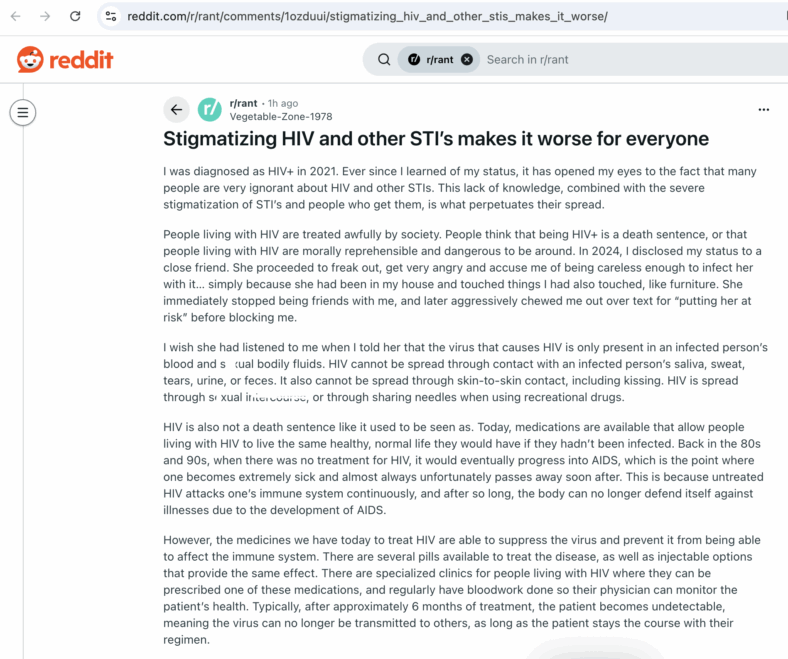
Back in 2021, this woman found out that she’s HIV positive, and she has no idea who gave this to her. But ever since she was diagnosed, it’s been eye-opening to her how people are largely ignorant regarding HIV.
She’s come to understand that the lack of information people have about HIV, coupled with the terrible stigma that comes attached to it, is how this misinformation keeps perpetuating.
She says that if you have HIV, society essentially treats you like a leper. People believe that if you have HIV, it’s some kind of a death sentence, or you bring danger to those around you.
Last year, she courageously disclosed to one of her best friends that she’s HIV positive, and it didn’t go well at all. Instead of being met with sympathy and compassion, she was met with vitriol.
“She proceeded to freak out, get very angry, and accuse me of being careless enough to infect her with it… simply because she had been in my house and touched things I had also touched, like furniture,” she explained.
“She immediately stopped being friends with me, and later aggressively chewed me out over text for ‘putting her at risk’ before blocking me.”
“I wish she had listened to me when I told her that the virus that causes HIV is only present in an infected person’s blood and [genital] bodily fluids. HIV cannot be spread through contact with an infected person’s saliva, sweat, tears, urine, or feces.”
You can’t get HIV from kissing someone; you get it from sleeping with someone or sharing needles with recreational drug use.
If you’re HIV positive, the medications we have today can help you live a relatively regular life, which wasn’t possible even 30 or 40 years ago. Additionally, with treatment, not as many people have HIV progress to AIDS.
Sign up for Chip Chick’s newsletter and get stories like this delivered to your inbox.
Modern medication is capable of suppressing the HIV virus, making the viral load virtually undetectable, so that it cannot be passed on to anyone else, as long as the treatment protocol is followed.
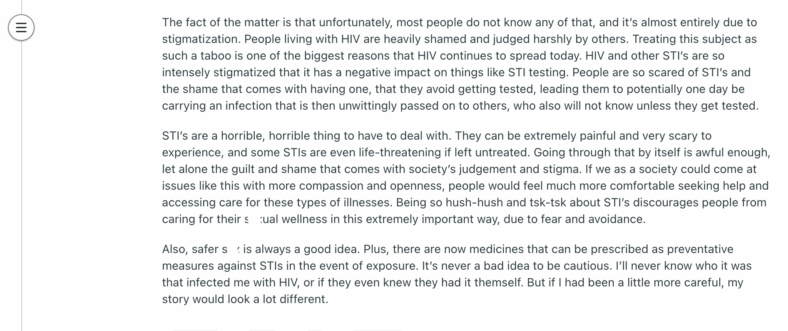
But she points out that countless people are unaware of this, due to the stigmatization attached to HIV and how people who have it are judged and shamed.
“Treating this subject as such a taboo is one of the biggest reasons that HIV continues to spread today. HIV and other STIs are so intensely stigmatized that it has a negative impact on things like STI testing,” she added.
“People are so scared of STIs and the shame that comes with having one, that they avoid getting tested, leading them to potentially one day be carrying an infection that is then unwittingly passed on to others, who also will not know unless they get tested.”
“STIs are a horrible, horrible thing to have to deal with. They can be extremely painful and very scary to experience, and some STIs are even life-threatening if left untreated.”
She wishes people would take the time to get an education and seek out treatment, because when we don’t talk about important topics like this, our health can end up on the line.
In conclusion, she reminds us that practicing safety while hooking up with others is a best practice, and she wishes she had been more cautious herself.
“I’ll never know who it was that infected me with HIV, or if they even knew they had it themself. But if I had been a little more careful, my story would look a lot different,” she concluded.

By Bre Avery Zacharski
Hi, I'm Bre, Chip Chick's CEO! I have a degree in Textile/Surface Design from The Fashion Institute of Technology, and... More about Bre Avery Zacharski