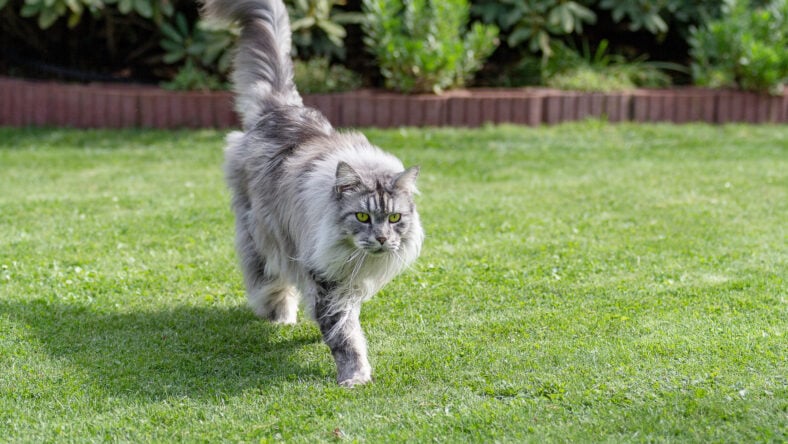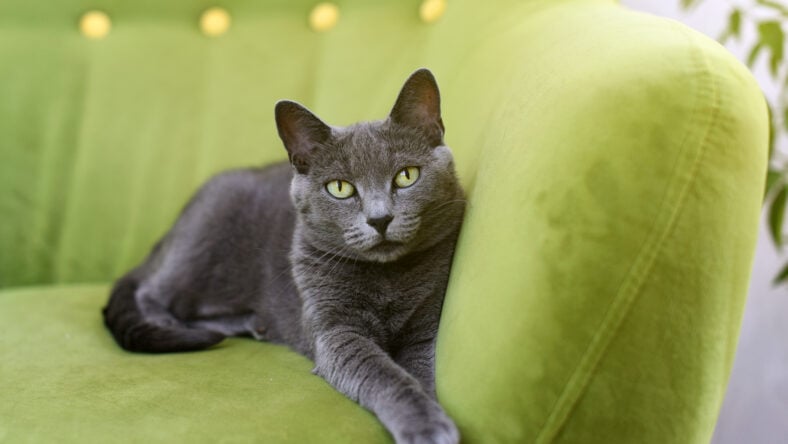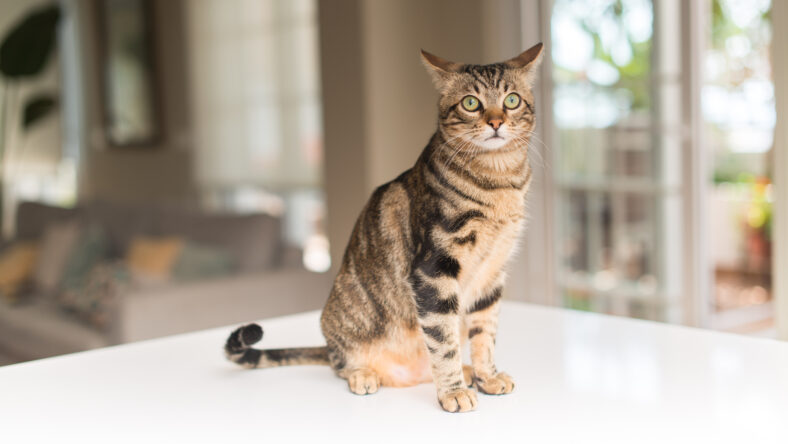
Cats have a reputation for being aloof and unfriendly, but many cat owners say that their pets are actually very caring and communicative.
Our feline friends have certainly learned to get what they want from humans by meowing. Now, researchers in Turkey have found that domestic cats meow more at male owners than female owners when greeting them at the door.
“Both the public imagination and the scientific community, for a time, viewed cats as loners with little need for social bonds,” said Kaan Kerman, a co-author of the study and lead investigator at the Animal Behavior and Human-animal Interactions Research Group at Bilkent University in Turkey.
“However, cats are more social than previously assumed. They do not interact with humans solely to obtain food. They actively seek social contact and form bonds with their caregivers.”
The research team studied 31 cats in their home environment through footage obtained by cameras fitted to the caregivers’ chests. The owners were asked to film the first 100 seconds of their interactions with their cat after returning home.
Then, the researchers analyzed the recordings. They tracked 22 specific behaviors, including the number of meows, yawning, and rubbing their heads against their owners’ legs.
Afterward, they determined that cats vocalized more frequently when greeting male caregivers. They considered the cats’ breed, gender, age, and even the size of the household, but the only consistent factor influencing cat vocalizations was the gender of the human.
In the first 100 seconds of greeting men, cats produced 4.3 meows on average compared to just 1.8 with women.
The researchers suggest this could be because male caregivers tend to talk less to their cats and are not as adept at interpreting what their pets want.
Sign up for Chip Chick’s newsletter and get stories like this delivered to your inbox.
So, the cats must adjust their communication to get the men’s attention.
“Cats used vocal communication more frequently when greeting male caregivers…male caregivers might engage less frequently in verbal behaviors compared to female caregivers,” wrote the study authors.
“This difference could prompt cats to use vocal signals more actively to elicit responses from male caregivers.”
Cats use various methods of communication to greet their owners, such as approaching and rubbing against the person, sticking their tails up, yawning, stretching, and scratching.
These are all ways that cats say hello, demonstrating their desire for connection and relief that their owners are home safe.
The research team also thinks that cultural factors may have influenced the results of their study. In the past, research has shown that people from different cultures interact with cats differently.
Since the study took place in Turkey, it’s possible that men in Turkey are less talkative with their cats. More research needs to be done on cat communication and behavior to confirm this theory.
The findings were published in the journal Ethology.

By Emily Chan
Emily Chan is a writer who covers lifestyle and news content. She graduated from Michigan State University with a degree in... More about Emily Chan