We are currently seeing the effects of climate change, and they cannot be ignored. Climate change is reshaping our planet in obvious ways, such as rapidly melting glaciers and more frequent extreme weather events.
Other effects are more subtle, but they still have a major impact on our way of life on Earth.
Recently, scientists from NASA Goddard Space Flight Center examined satellite data ranging from 1985 to 2020 and discovered that tree cover across boreal forests is steadily inching northward to escape the heat.
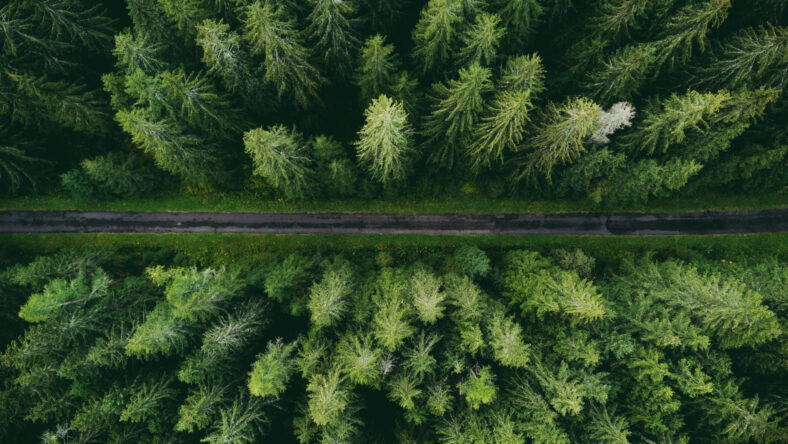
Boreal forests are the largest terrestrial biome on Earth. The vast northern woodlands stretch across Alaska, Canada, Russia, and Scandinavia.
They are important because they help filter out excess greenhouse gases in the atmosphere. But as global temperatures continue to rise, they are also warming faster than any other type of forest, so their future remains uncertain.
The research team analyzed decades of imagery from NASA’s Landsat program and created a detailed map of tree cover to track the changes that occurred over a time span of 36 years.
They found that boreal forests had grown roughly 12% and shifted north by 0.29 degrees of latitude.
“These findings confirm the northward advance of the boreal forest and implicate the future importance of the region’s greening to the global carbon budget,” wrote the researchers.
The growth is good news, but the shift northward could spell trouble. The expansion of the forests is mostly made up of young boreal trees.
Sign up for Chip Chick’s newsletter and get stories like this delivered to your inbox.
They tend to soak up more carbon as they grow, so forests could absorb an estimated 1.1 to 5.9 gigatonnes. All the trees in the world hold about 861 gigatonnes of carbon.
But at the same time, an increasingly warming climate is also destabilizing boreal forests. For instance, enormous wildfires are spreading across western Canada while outbreaks of bark beetles are destroying pine trees.
Furthermore, shorter winters and hotter temperatures in the summer are drying out soils and causing harmful algae blooms to form in lakes. The chances of large numbers of trees dying off are only getting higher.
While some regions might be seeing boreal forest growth, they are at great risk of tree cover loss due to wildfires, drought, diseases, and insect outbreaks, which offset any long-term benefits. If boreal forests are struggling, that’s not a good sign of what’s to come.
“A more complete understanding of boreal forest dynamics will require integration of satellite time series with field-based measurements of canopy structure and the environmental drivers of growth, mortality, and species turnover,” concluded the researchers.
“Moreover, translating the resulting information into action to forestall and adapt to climate change will require effective communication across scientific, government, and commercial domains of human activity.”
The findings of the study were published in the journal Biogeosciences.

By Emily Chan
Emily Chan is a writer who covers lifestyle and news content. She graduated from Michigan State University with a degree in... More about Emily Chan