Liudmila Dutko - stock.adobe.com - illustrative purposes only, not the actual person - pictured above is a female doctor holding a stethoscope

Human content, AI powered search.

Sign up for our lifestyle newsletter: relationships, romance and real stories, straight to your inbox.
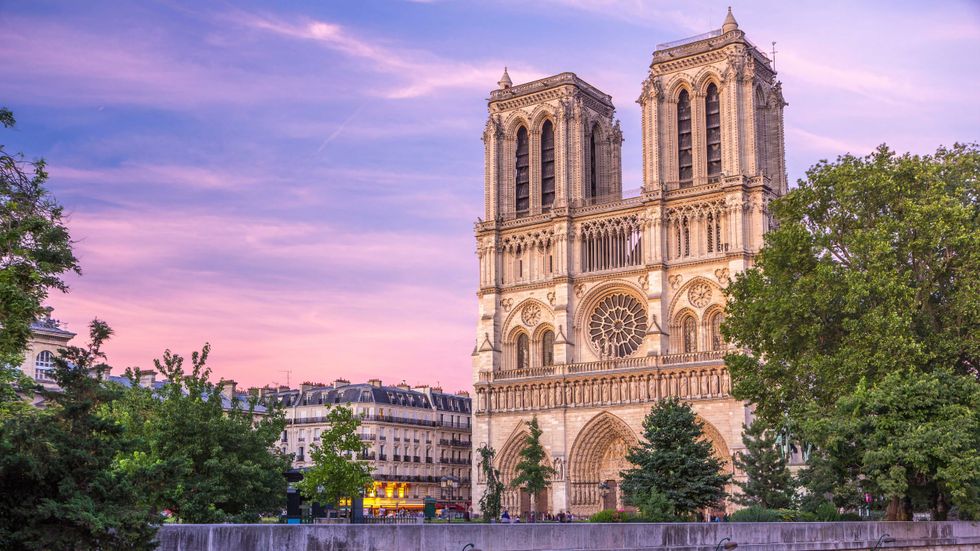
After suffering severe damage from a fire in 2019, the Notre-Dame Cathedral, located in the heart of Paris, reopened in late 2024. Officials are looking to make some updates to the area and give the square in front of the cathedral a whole new look. They plan to plant 160 new trees around the cathedral and turn the underground parking lot into a visitor center.
Before these changes can be made, archaeologists must first conduct excavations near the cathedral to preserve centuries of French history. They began excavating in January and are expected to be done in eight months.
So far, they have dug 13 feet beneath the surface and uncovered hundreds of artifacts from different time periods. Some even date back about 2,000 years ago during the Roman occupation.
Notre-Dame sits on a small, natural island in the Seine River called the Île de la Cité. The cathedral's construction began in 1163 and was mostly finished by the mid-14th century.
It was home to a Roman settlement in the fourth and fifth centuries. Then, the site contained Merovingian and Carolingian grain pits from the sixth to the 10th centuries.
During the Middle Ages, it was full of houses divided by a single street. Researchers have discovered the old cellars and latrine pits of those homes.
Numerous artifacts were found, including animal bones, metal pieces, intact cups and jugs, coins featuring the Roman emperor Constantine, and shards of medieval pottery with reddish markings. The objects were sent to the city's archaeology laboratory for further analysis and conservation.
For more than five years, hundreds of conservationists have worked to repair the damage done to the cathedral. On April 15, 2019, a fire broke out at Notre-Dame during evening mass. Firefighters responded quickly, but the cathedral's wooden roof and iconic spire collapsed.
During the restoration process, they discovered some hidden characteristics of the building. There were large, 800-year-old iron staples holding together the stone blocks.
 HyperlapsePro - stock.adobe.com - illustrative purposes only
Sign up for Chip Chick's newsletter and get stories like this delivered to your inbox.
Archaeologists digging underneath the church stumbled upon two lead coffins. They were able to identify the remains in one, but not the other.
The first coffin belonged to Antoine de la Porte, an 83-year-old high priest who died sometime in 1710. The other held the remains of an unknown horseman. He may have been a French Renaissance poet named Joachim du Bellay, who died in 1560.
Furthermore, archaeologists unearthed pieces of the cathedral's original 13th-century rood screen, which is a decorative partition that separated the choir from the nave. In addition, they found painted sculptures and the remains of a 19th-century brick pipe underground heating system.
"It's a rare opportunity for us to work on something that's tangibly going to make a difference to the history of Paris," said Lucie Altenburg, a conservator with the Paris archaeology unit.