After performing a genetic analysis on the northern green anaconda, experts found that it split from its southern counterpart around 10 million years ago and identified it as a new species.
The recent research has reframed scientific understanding of the creature and raised fresh concerns about its conservation.
Green anacondas are known as the heaviest snakes in the world, and they are also among the longest. The heaviest individual ever recorded weighed 500 pounds and measured nearly 28 feet long.
The anacondas are found in the rivers and rainforests of South America, where they move with lightning-fast speed and suffocate large prey to death before swallowing them whole.
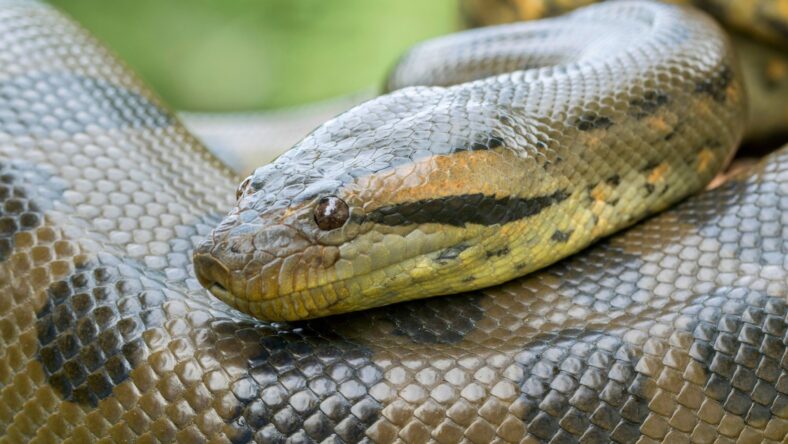
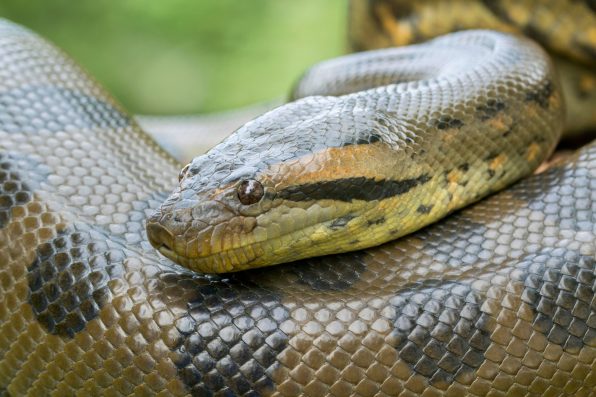
The snakes are olive-colored with black spots, allowing them to blend in with their surroundings. They lurk in the waterways of the Amazon, patiently waiting to ambush deer, capybaras, and caimans.
They are not venomous, but the way they take down their prey is still brutal. They use their large, flexible jaws to strike and crush victims with their bodies.
Green anacondas are top predators in the food chain, so they have a vital role in ecological processes. Their very presence shapes how other species interact with one another and what traits they develop.
They are also highly sensitive to environmental changes. If their population is affected, whole ecosystems can be thrown out of balance. That’s why it’s crucial to monitor their numbers and be aware of the various species.
Previously, four different species of anaconda have been recognized. It was thought that only one species of green anaconda existed in the wild. But, a new study has proven that the northern green anaconda belongs to a separate species of its own.
A team of researchers led by Brian Fry, a professor and biologist from the University of Queensland in Australia, took a trip to the Ecuadorian Amazon in the Bameno region of Baihuaeri Waorani Territory in 2022, following an invitation from the Waorani people to observe anacondas.
They collected data regarding the snakes’ habitat, location, and rainfall patterns in the area. They also gathered DNA samples from each of the specimens they encountered. After returning to the lab and analyzing the samples, the team found that the green anaconda is actually two genetically distinct species.
The first is the southern green anaconda, Eunectes murinus, which is the one scientists already knew about. It lives in Peru, Bolivia, Brazil, and French Guiana.
The second newly identified species is the northern green anaconda, or Eunectes akayima, which inhabits Ecuador, Colombia, Venezuela, Guyana, Trinidad, Suriname, and French Guiana.
The two species look the same, but they’re pretty different genetically. The northern green anaconda species diverged from the southern green anaconda almost 10 million years ago, and their level of genetic diversity is a staggering 5.5 percent. In comparison, humans and chimpanzees differ by about 2.2 percent.
The new findings have changed the way scientists look at the conservation of the green anaconda species. Now that two different species have been identified, experts must also consider that the snakes may have different ecological ranges and threats to survival.
The biggest threats that the green anaconda currently faces are deforestation, habitat degradation, drought, forest fires, and climate change.
Sign up for Chip Chick’s newsletter and get stories like this delivered to your inbox.

By Emily Chan
Emily Chan is a writer who covers lifestyle and news content. She graduated from Michigan State University with a degree in... More about Emily Chan