Fashion trends tend to cycle over time, with styles from previous decades, or even centuries, making a comeback in the modern era.
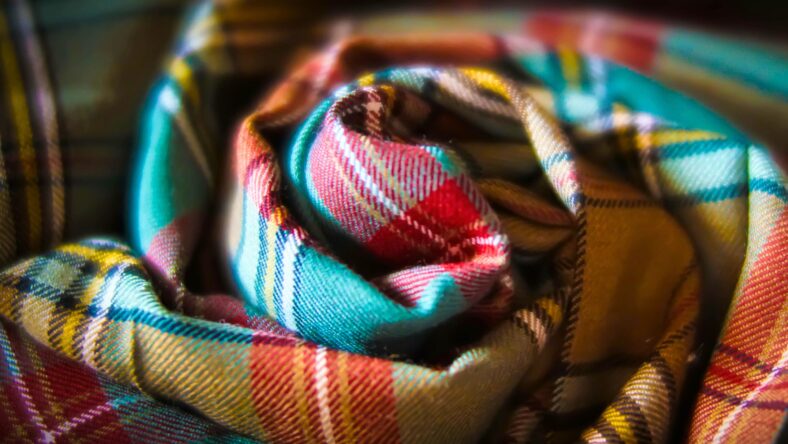
A team of researchers and designers have banded together to recreate the oldest surviving piece of Scottish tartan for modern wear, allowing people to rock the historic plaid.
The Glen Affric tartan was uncovered in a peat bog in the Scottish Highlands during forestry work in the 1980s. Researchers from the Scottish Tartans Authority, a nonprofit organization dedicated to the preservation of Scotland’s national cloth, used radiocarbon dating on the fabric and found that it dated back to around 1500 to 1600.
The experts declared that it was the oldest example of “true tartan” in Scotland. Tartan is a type of cloth that has crossing horizontal and vertical stripes in multiple colors, forming rectangular patterns.
In 19th-century Scotland, different clans were associated with their own patterns. The specimen from the peat bog did not match the patterns of any known clan tartans.
The fabric was stained by the peat, but researchers were able to analyze the dyes to figure out what it looked like. After studying eight dye samples, they determined that it had contained green, brown, red, and yellow.
Based on this information, experts from the Scottish Tartans Authority worked with designers from the House of Edgar, a manufacturer of tartan fabrics, to recreate the 16th-century pattern.
Peter MacDonald, the head of research and collections at the Scottish Tartans Authority, told CNN that they strived to “maintain the pattern and colors, but refining the shades to something that would have existed at the time but which also work today.”
He added that the original fabric was a “status piece,” most likely worn as a shawl or an upper body wrap by a person of high rank.
The reworked tartan is now available for purchase as part of House of Edgar’s new “Seventeen Eighty Three Collection,” which refers to the year the company was founded. Buyers can have a kilt or accessory made from the fabric.
“I create new tartans every day, but this project is truly special—a once-in-a-lifetime opportunity to recreate a piece of history,” Emma Wilkinson, a designer at House of Edgar, told the PA News Agency.
“Tartan is such an iconic piece of Scotland’s identity, and it has been a true pleasure to see this fabric come back to life to be enjoyed for generations to come.”
She also told CNN that the experience had been “a real privilege” and urged anyone interested in seeing the Glen Affric recreation to reach out to their local kiltmakers since many kilt shops across Scotland and other parts of the world will have the fabric.
The Glen Affric artifact was part of an exhibition featuring tartans at the museum V&A Dundee, attracting many visitors. The exhibition ended in January.
Sign up for Chip Chick’s newsletter and get stories like this delivered to your inbox.

By Emily Chan
Emily Chan is a writer who covers lifestyle and news content. She graduated from Michigan State University with a degree in... More about Emily Chan