Simon & Schuster, Simon & Schuster, Penguin Random House - pictured above are some of the books deemed most disturbing on Goodreads

Human content, AI powered search.

Sign up for our lifestyle newsletter: relationships, romance and real stories, straight to your inbox.
When it comes to your garden, every single plant has a role to play, from towering trees to even the humblest of groundcovers.
But, in between these extremes lie the unsung heroes of the gardening world: filler plants.
These plants may not always make headlines. Still, they're essential for creating a lush, layered garden that feels full and vibrant.
Filler plants, with their unique ability to blend into the garden, add depth and dimension to any outdoor space – filling in the gaps between more prominent plants and providing a continuous tapestry of color and texture.
The Benefits Of Filler Plants
Filler plants do more than just occupy empty spaces in your garden. They create visual harmony and can help to balance out the bold statements made by larger, more dramatic plants.
By adding these versatile plants to your garden, you're ensuring a seamless transition throughout your landscape, which helps to draw the eye naturally across your garden.
Additionally, they can be a low-maintenance solution for areas where other plants struggle to thrive, making them a practical as well as an aesthetic choice.
So, here are some of our favorite filler plant varieties, as well as how to care for them.
 Videowokart - stock.adobe.com - illustrative purposes only
Aster
Aster, which is native to many regions across the world, is a garden classic known for its daisy-like flowers that come in shades of blue, purple, and white.
These star-shaped blooms are not only a feast for the eyes but also a haven for pollinators. Plus, Asters are perfect as filler plants because of their medium height and bushy form, which can easily blend into any garden setting.
Caring for Asters involves planting them in well-drained soil and ensuring they receive full to partial sun. They're also relatively low-maintenance but benefit from occasional deadheading to extend their blooming period.
Marigold
Originating from Mexico, Marigolds are robust and vibrant, known for their rich, golden-orange blossoms that seem to embody the essence of summer.
They also make excellent filler plants due to their dense foliage and ability to bloom abundantly, filling up any gaps with a splash of color.
Additionally, Marigolds are celebrated for their pest-repellent qualities, which can help protect nearby plants.
The best part? They're easy to care for! Marigolds just thrive in sunny spots with well-draining soil and only need regular watering to keep looking their best.
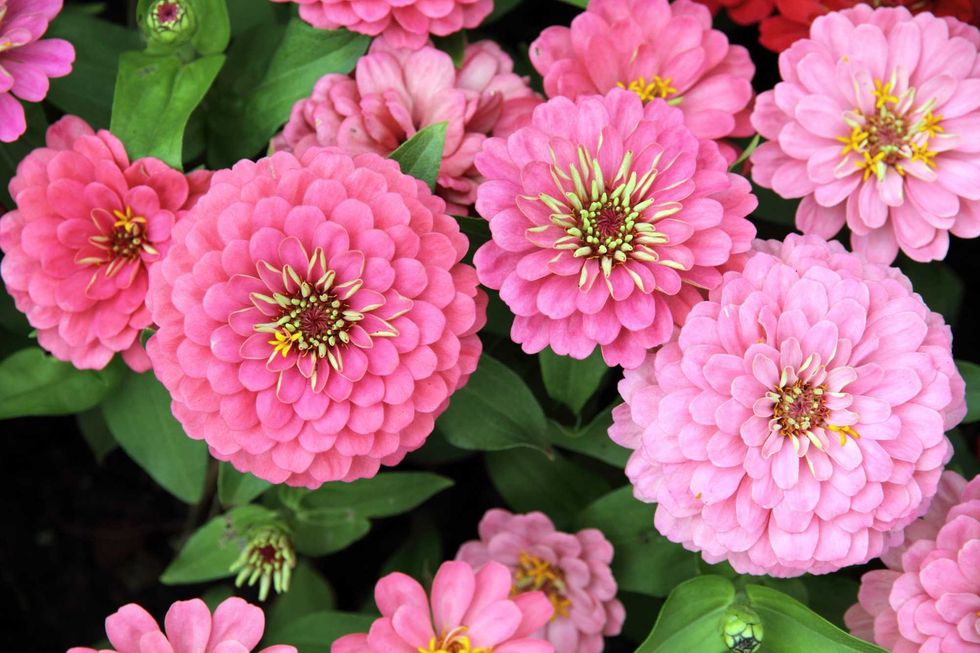
Zinnias
Zinnias are cheerful flowers hailing from Mexico and the southwestern United States. With their bright, showy flowers, they can light up any garden.
As filler plants, Zinnias contribute a burst of color at varying heights, depending on the variety, and their voluminous growth can quickly cover large areas.
They are very easy to care for, too, needing only basic watering and a sunny location. Deadheading the spent blooms will encourage more flowers and extend their colorful display as well.
Miss Lemon Abelia
The Miss Lemon Abelia, which has origins in East Asia, is known for its variegated foliage of yellow and green, which provides a striking contrast in any garden. Its small pinkish-white flowers, although not as bold as some other plants, also help add a delicate texture.
As a filler plant, its mounded growth habit helps to soften the edges of garden beds and integrates well with other plants.
Caring for this shrub will just encompass planting it in full sun to partial shade and providing regular watering, especially in hotter climates.
Goldenrod
Now, you might not know that Goldenrod – which is native to North America – is often unfairly called a weed. But, in reality, it is a fantastic garden plant.
Its sprays of tiny, bright yellow flowers add height and color, making it an ideal background filler in garden designs.
Goldenrods are even drought-tolerant once established and thrive in full sun, making them low-maintenance and perfect for gardeners looking for sustainable planting options.
Common Yarrow
Last but not least, the Common Yarrow, which hails from temperate regions of the Northern Hemisphere, is highly adaptable and can thrive in a variety of garden settings.
Its flat clusters of small, tightly packed flowers range from white to pink and red, adding a subtle yet sophisticated layer of texture.
As a filler, Yarrow's fern-like foliage helps to fill in gaps and creates a soft, cohesive look throughout any garden. It even requires minimal care, thrives in well-drained soil and full sun, and is tolerant of drought, making it ideal for xeriscaping or low-water garden designs.
Sign up for Chip Chick's newsletter and get stories like this delivered to your inbox.