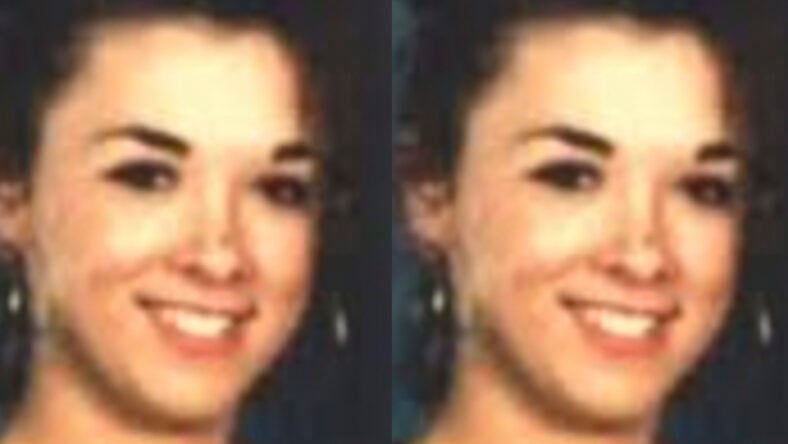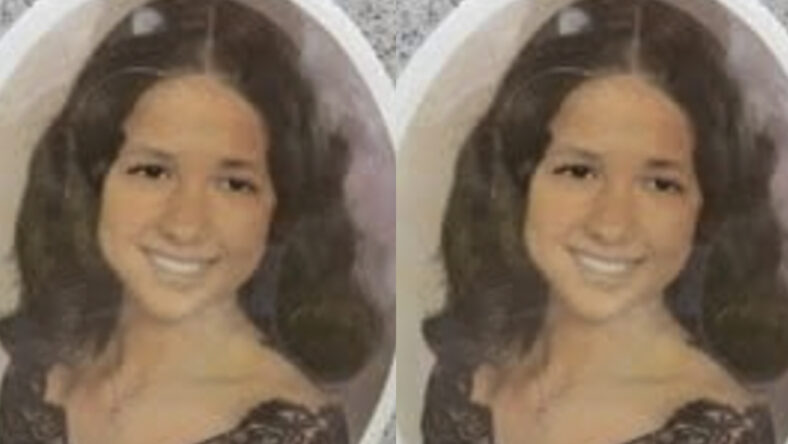
Many of those who once knew Dr. Margaret Mary Kilcoyne, a brilliant cardiologist who vanished from her Nantucket vacation home in 1980, are now deceased.
But her disappearance remains as puzzling today as it was nearly 46 years ago, with people still debating whether she took her own life or fell victim to foul play.
“The whole thing, right from the beginning, was strange. You’d have to say it was just bizarre from the beginning,” said retired Nantucket Police Department captain George Rezendes.
Margaret, aged 50, led an intriguing life. Originally born in Worcester, Massachusetts, she graduated from the Boston Children’s Hospital School of Nursing in 1951.
Then, she earned a bachelor’s degree from Boston University and subsequently finished medical school at the University of Vermont in 1964.
Despite being a cardiologist who served as an assistant professor of medicine at the Columbia College of Physicians and Surgeons, Margaret was also a Catholic and a bit of a loner. Perhaps that’s why she chose to build a summer home in the secluded Tom Nevers region of Nantucket Island.
It was at her summer residence that Margaret ultimately went missing on January 26, 1980.
Leading up to that fateful night, the cardiologist had seemingly made a major breakthrough in her research at Columbia University.
She’d specifically been studying hypertension and discovered that angiotensin, a peptide hormone, was present in the brain. This finding led Margaret to believe she might be able to win a Nobel Prize, a possibility she even began sharing with friends and family members.
Sign up for Chip Chick’s newsletter and get stories like this delivered to your inbox.
Then, on January 25, 1980, she left her research lab in Manhattan and headed to Nantucket to celebrate. She met her brother, Leo, there and planned to mark her discovery with a little getaway. So that evening, Margaret and Leo dined with two friends, Richard and Grace Coffin, at her home.
Yet, by the following morning, the 50-year-old was gone. Authorities were first alerted to Margaret’s disappearance at 7:15 a.m. on January 26, 1980, when Leo phoned the police.
They learned that she’d gone to bed sometime between 10:00 p.m. and 10:30 p.m. the prior night, and when Leo went to wake Margaret for church, she was nowhere to be found.
Even more peculiar? It was frigid in Nantucket, and Margaret had left behind her winter coat and boots, as well as her purse and wristwatch. Had she left sometime during the evening, temperatures would’ve been well below freezing.
Once Margaret was reported missing, investigators conducted an extensive search of the area surrounding her vacation home. They also checked to see whether she’d gone to the airport or left via ferry.
Nonetheless, after scouring Nantucket and even deploying divers into Tom Nevers Pond for two days, no evidence of Margaret’s whereabouts was found, and the effort was called off on January 28.
Her case might’ve been forgotten about, too, if two locals hadn’t stumbled upon something shocking while walking their dog on February 3, 1980.
Near the Philips Run swamp region of Tom Nevers Road, they found some of Margaret’s belongings stacked in plain sight at the edge of a clearing. The items included her passport, wallet, savings book, and a pair of sandals.
Moreover, approximately 150 yards away, a brown long-sleeved shirt that belonged to Margaret was also recovered.
“We had gone through that swamp. To me, it felt like a setup,” detailed Bruce Watts, former Nantucket fire chief.
The finding prompted Margaret’s case to become national news. And in Nantucket, authorities began retracing their steps as new tips and alleged sightings were reported.
Investigators went from searching the island to visiting the cardiologist’s New York City apartment and even interviewing her colleagues.
In the meantime, one main theory emerged: that Margaret had committed suicide by walking into the ocean. Her own brother, Leo, had given rise to such speculation mere hours after she’d vanished.
While speaking to the police, he claimed Margaret had been “very upset and in a somewhat confused state.” This thought was corroborated by friends Richard and Grace Coffin, who said Margaret had been “hyper” the day before she went missing.
Additionally, it came to light that prior to her celebratory dinner with Leo and the Coffins, Margaret had visited a grocery store, where she bought $645 worth of food and spent $200 on liquor.
She reportedly told workers at the store that she planned to host a party in the wake of her medical discovery. But she never told anyone in her personal life about the gathering or conducted any other planning for the event.
What was most curious, however, was a tape recording found in Margaret’s home the day she disappeared. The recording was of a two-hour phone call she had with her brother, in which she rambled about her research and spirituality. At one point, she even claimed to have gotten a message from Leo’s late wife, Julie.
Some people thought the tape was evidence of Margaret’s unraveling psyche, proving that she’d been experiencing a manic episode and had possibly been suicidal. Still, to those who knew her well, it just sounded normal.
“They said it was a typical conversation, with rapid-fire talking where you couldn’t get a word in edgewise,” former Nantucket Police chief Paul Hunter said at the time.
“That’s why I can’t figure this whole thing out. Because it can’t have been suicide. Tell me someone has committed suicide and I’ll say, ‘Well, yes, maybe he was depressed. Or worried about something the rest of us didn’t know about.’ But not Margaret,” added Dr. Rosamond Kane, a colleague of Margaret’s.
Despite all the debate, though, no proof has ever been found of any suicide or foul play in Margaret’s case. Her body has never been recovered, and it’s still unclear how her belongings turned up one week later in a region of the island that had already been heavily scoured. So, what happened to her remains a mystery over four decades later.
The 50-year-old was extremely progressive for her time. She was the first woman ever accepted into the University of Vermont Medical School, and she proved successful in the field of medicine, which was dominated by men.
Margaret also never married and owned multiple properties by herself, including her Nantucket home, as well as apartments in both New York and Boston.
So, while many still believe she might’ve taken her own life, others think her disappearance was intentional.
“My theory for this whole thing, and I still stick to it, is that she flew out undetected and went somewhere and just disappeared,” opined former Nantucket fire chief Bruce Watts.
“I feel Dr. Kilcoyne was depressed but is still alive somewhere today, and that the suicide was staged between her and her brother Leo. That is why her things were found at a place that was already searched. She probably was having some sort of mental breakdown and didn’t want to receive the prestigious award she was nominated to receive for her work. But I feel she is still alive and living in Canada or someplace under a false identity,” agreed Paul Smith, a former Nantucket police officer.
Whether or not Leo was involved will likely never be ascertained. He died in a car accident on June 20, 1992, after reportedly falling asleep behind the wheel. Many of the other people who personally knew Margaret have since perished, too.
She was legally declared dead in 1989, and now, all that’s left is speculation surrounding her strange case.

By Katharina Buczek
Katharina Buczek graduated from Stony Brook University with a degree in Journalism and a minor in Digital Arts. Specializing in... More about Katharina Buczek