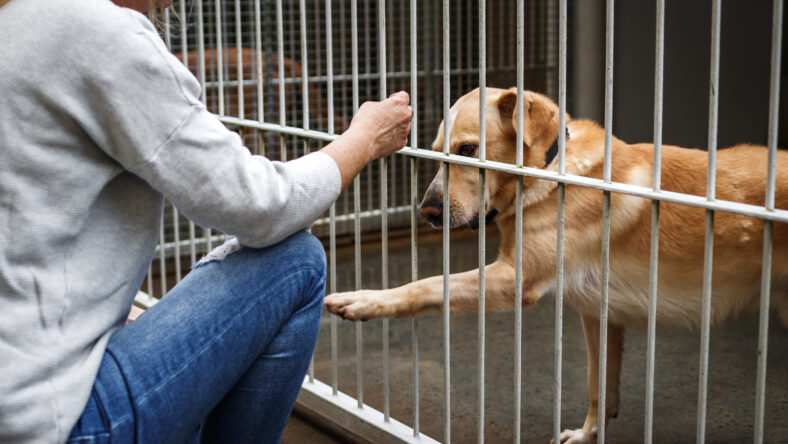
Have you ever gone to a dog park and noticed that a lot of dogs there actually look a great deal like their owners?
The phenomenon may not apply to every dog and owner out there, but research has shown that there is some truth behind dogs looking like their owners. But what is responsible for the resemblance?
One of the first psychologists to test the idea was Michael Roy from the University of California, San Diego. He went to three dog parks in the area and took photographs of the dogs and owners separately.
Then, he asked a group of participants to match up the pairs. They were able to figure out which dog belonged to which owner with “reasonable accuracy.”
Since then, similar studies have been repeated multiple times, particularly by Dr. Sadahiko Nakajima at Kwansei Gakuin University in Japan. In 2009, Dr. Nakajima published a study in which he used photographs of humans and their pooches.
He asked undergraduate students to match the people and dogs up from the pictures, which were in random order. The results revealed that the students correctly guessed the pup and its owner at levels significantly above random chance. In addition, they showed that people are using physical appearance to make these judgments.
Next, Dr. Nakajima wanted to figure out why dogs looked so much like their owners. How did people choose dogs that resembled them so closely? In another study from 2013, he covered up certain facial features in the photos, such as the eyes and mouth. He asked students to match the dogs and owners again.
The rate at which the students were able to correctly identify the pup and owner dropped considerably when the eyes in the photos were obstructed. The finding demonstrates that the eyes are the most important facial feature that links humans and dogs together, over qualities such as size and hairstyle.
The reason why some dogs look like their owners may be due to the “mere exposure effect,” which is the idea that humans prefer things that are familiar to them.
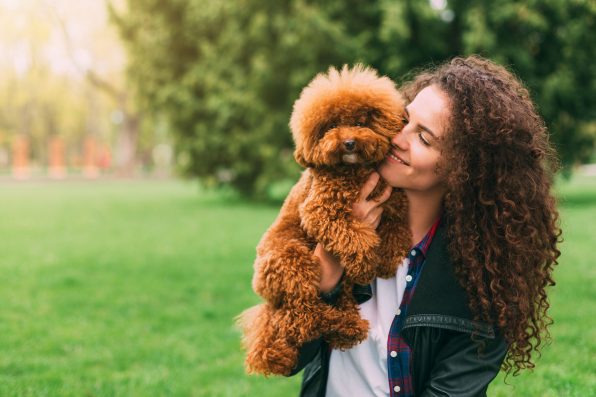
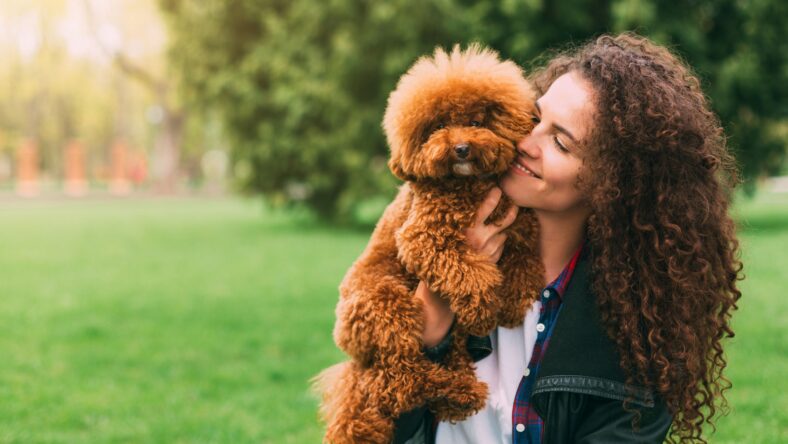
People see their own faces in the mirror every day so that repeated exposure might lead them to choose a dog that is similar to them in appearance. For instance, an individual with long, black hair might pick a dog with long, floppy ears and black fur.
Physical appearance isn’t the only factor in looking like each other. The emotional bond that humans share with dogs plays a part in the resemblance as well.
Dogs and their owners resemble each other in the “Big Five personality dimensions,” which are extraversion, openness, agreeableness, conscientiousness, and neuroticism.
Not only are dogs considered humankind’s best friend, but they are also our canine twins.
Sign up for Chip Chick’s newsletter and get stories like this delivered to your inbox.

By Emily Chan
Emily Chan is a writer who covers lifestyle and news content. She graduated from Michigan State University with a degree in... More about Emily Chan