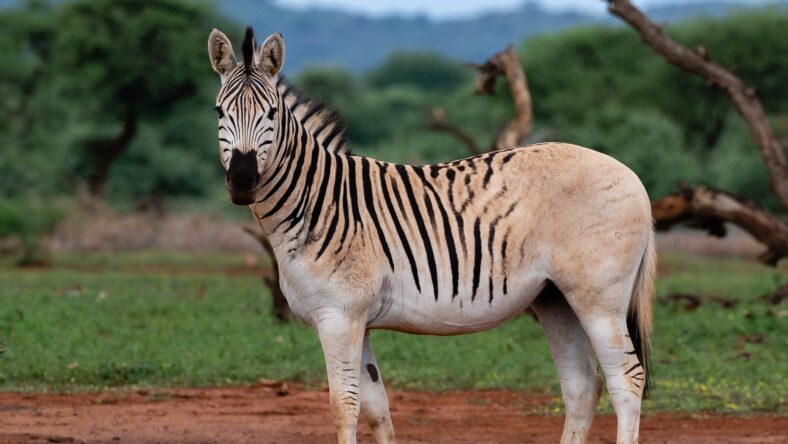
Zebras aren’t the only four-legged horse-like animals to exist. Back in the day, there was the quagga, but it is now extinct due to intense hunting.
A group of people in South Africa is trying to bring back the quagga and reintroduce it to its former habitat through an initiative called the Quagga Project.
The quagga was a type of zebra living in South Africa. It had brown stripes on its head and neck that gradually faded down its body. So, from the shoulders to the hindquarters, it closely resembled a horse.
The quagga population used to be abundant, but during the 19th century, the herbivores were hunted to extinction. It was highly sought after for its meat and hide. Farmers also killed them off to prevent them from eating crops.
The species was extinct by the end of the century. The last wild quagga died sometime in the late 1870s. On August 12, 1883, the last captive individual died at Artis Zoo in Amsterdam.
Starting from the late 1700s, the quagga was thought to be its own species, but a DNA analysis in 1984 proved that it was a subspecies of the plains zebra in South Africa.
To conduct the analysis, researchers from the University of California and the San Diego Zoo extracted genetic material from a piece of dried quagga muscle tissue housed at a museum. It was also the first time that an extinct animal’s DNA was tested.
More recent research has shown that the quagga had very little genetic diversity. The research involved comparing DNA from eight quagga specimens to DNA from plains zebras.
In addition, it was discovered that the quagga likely diverged from the plains zebra around 140,000 years ago, during the Penultimate Glacial Maximum.
Although the quagga is now extinct, some people have been trying to bring it back to life. A taxidermist named Reinhold Rau established the Quagga Project in the late 1980s with the hope of recreating the lost animal through selective breeding processes.
“The project is aimed at rectifying a tragic mistake made over a hundred years ago through greed and short-sightedness. It is hoped that if this revival is successful, in due course herds showing the phenotype of the original quagga will again roam the plains of the Karoo,” stated the Quagga Project on its website.
Over the past few decades, modern zebras have been used to breed certain genetic traits into future generations. These traits include making the stripes disappear from the neck down, producing a brown chestnut color on the unstriped parts of the body, and creating a reddish muzzle.
Some foals with striped heads that gradually fade toward the rear ends have been successfully produced through the project. However, there is still a long way to go before an actual quagga is in our midst again.
Sign up for Chip Chick’s newsletter and get stories like this delivered to your inbox.

By Emily Chan
Emily Chan is a writer who covers lifestyle and news content. She graduated from Michigan State University with a degree in... More about Emily Chan