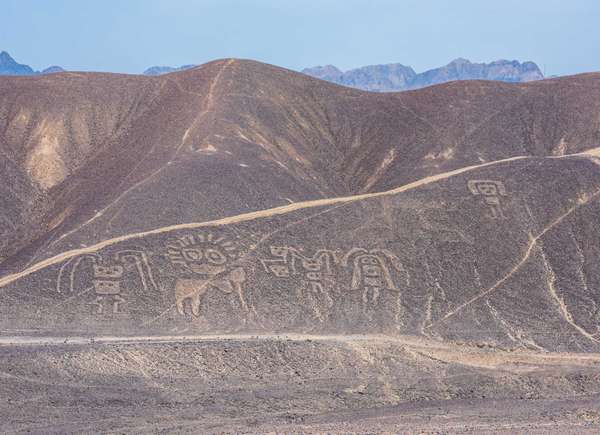
javarman - stock.adobe.com - illustrative purposes only - pictured above are some of the Nazca Lines in Peru

Human content, AI powered search.

Sign up for our lifestyle newsletter: relationships, romance and real stories, straight to your inbox.
Burying little kids six and under in jars was a standard funerary custom for the ancient Nazca people of Peru; however, one urn dated from 1,600 years ago is not like the rest.
Inside were two baby girls who passed away in the first couple of months here on Earth, and one of them was a cyclops. Nothing like her has ever been seen in an ancient burial before, while the girl placed above her in the urn was perfectly normal.
Although both babies were placed in the exact same urn, they had different moms, but it wasn't clear if they had any genetic relation to one another due to poor preservation.
The urn was uncovered at an archaeological site called Jauranga, in the Palpa Valley of Peru. This is the same area where the infamous Nazca Lines sprawl across the terrain.
Cyclopia is a super rare congenital condition that can be fatal, in which a baby has only one eye (much like the cyclops depicted in Greek mythology), and whose brain doesn't divide into two distinct left and right hemispheres.
Cyclopia happens in approximately 1 in every 100,000 births and proves to be lethal before or not long after a child is delivered.
The tiny girl in the urn had an exceptionally small skull and just one eye socket directly in the middle of her face. Her cranial bones indicated that she had additional developmental problems.
Researchers sequenced the little girl's genome in order to learn more about her brief life, and they learned that she had trisomy 13, a genetic condition known to cause cyclopia.
It seems the baby girl lived a couple of weeks or even months after her mom delivered her, according to researchers. What this means is that her family had to have given her an exceptional amount of care.
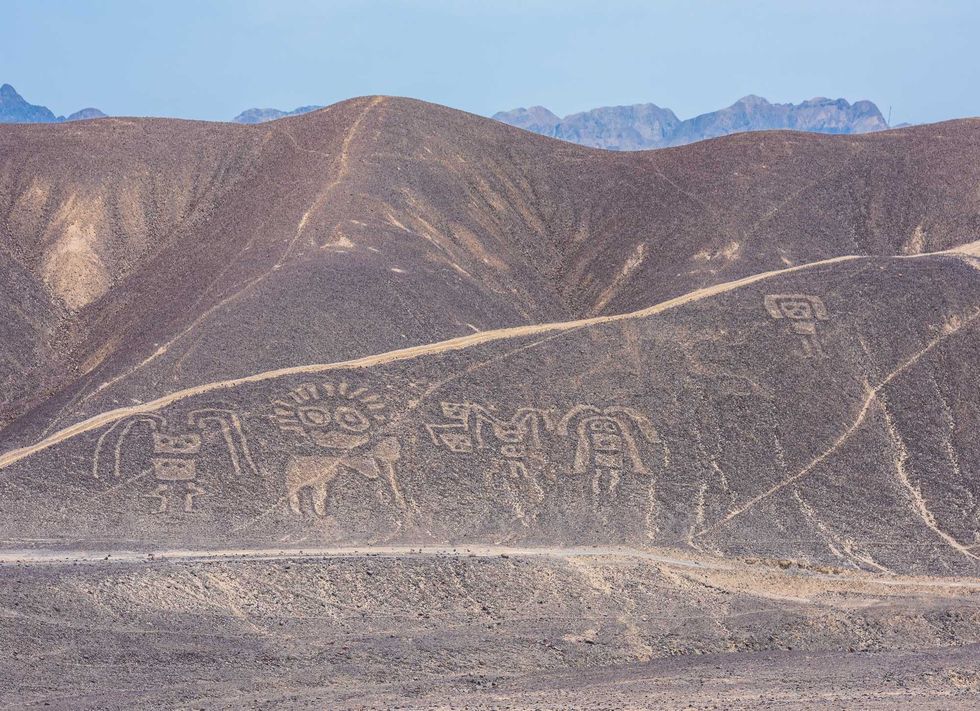 javarman - stock.adobe.com - illustrative purposes only - pictured above are some of the Nazca Lines in Peru
So while this little girl was born with an appearance that was starkly different from her peers, she was not treated any differently in death.
In ancient Andean societies, those with disabilities occasionally had specific religious or social roles, but she wasn't denied a regular burial or given special treatment.
It is strange for the Nazca people to have two babies buried in a single urn.
The study was published in the scientific journal PNAS.