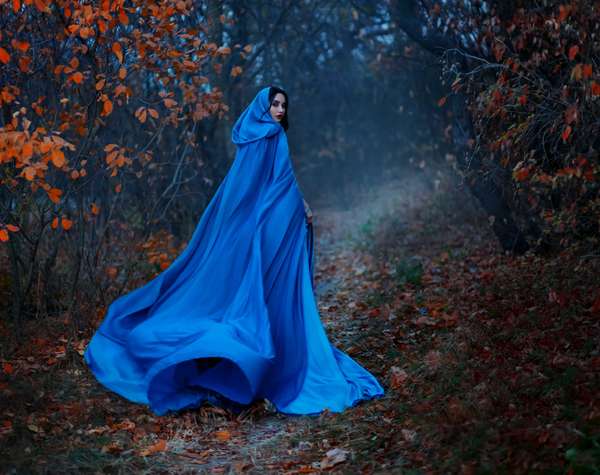
kharchenkoirina - stock.adobe.com - illustrative purposes only, not the actual person - pictured above is a witch in the woods

Human content, AI powered search.

Sign up for our lifestyle newsletter: relationships, romance and real stories, straight to your inbox.
A 17th-century Scottish woman from Auldearn, Nairnshire, named Isobel Gowdie, is famous for giving some of the most detailed confessions of witchcraft in British history.
Not much is actually known about Isobel Gowdie, as there are no surviving records about her from that time. She was married to John Gilbert and was between 30 and 50 years old when she made her confessions. It is unclear whether she had any children.
Isobel and her husband lived in Loch Loy, which was about two miles from Auldearn. Her husband was a farm laborer and would have been provided with a piece of land and a cottage to live in.
Isobel helped her husband sell wares at the local market. She likely spent her days baking bread, milking animals, weeding, and spinning yarn.
She probably did not have much education. However, she did have an active imagination for not being able to read or write. Isobel Gowdie's confessions became forgotten for nearly two centuries.
It wasn't until 1833, when Robert Pitcairn published "Ancient Criminal Trials in Scotland," that her confessions were known again.
According to original documents rediscovered among an uncatalogued box of papers that once belonged to Isobel's landlord, Isobel made four confessions over a period of six weeks. She was tried in 1662 during the height of the Great Scottish Witch Hunt.
On April 13, 1662, she made her first confession. Afterward, she would have been imprisoned in the Tolbooth in Auldearn, beaten harshly and deprived of sleep as a form of torture.
In her confessions, she used rhyming chants. She claimed to have entered a pact with the Devil, joined a coven, and flown through the air on cornstalks. She named 12 other people as witches. She also claimed that she killed lots of people and could shape-shift into a hare and a crow.
 kharchenkoirina - stock.adobe.com - illustrative purposes only, not the actual person - pictured above is a witch in the woods
Once she was in her animal form, she could sneak into castles and houses to eat their food, steal ale from barrels, and perform magic rituals.
She described at least 27 charms that she could cast onto a person, many of which included the transfer of illness from a sick individual to a cat or a dog.
After six weeks of imprisonment and interrogation, she was convicted of witchcraft. There is no record of Isobel being executed, but she was likely transported to the gallows. Following her execution, her body would have been burned. The execution would have been a public affair.
Many theories have surfaced to explain why Isobel might have given such bizarre confessions. She may have had some form of psychosis or was suffering from ergotism, which is caused by ingesting mold that grows on rye, leading to hallucinations. Rye was grown in Nairn at the time Isobel was alive, and she even mentions rye in her confessions.
It is said that she still appears today in the form of a green lady walking the streets of Auldearn and Nairn.
Sign up for Chip Chick's newsletter and get exclusive stories like this delivered to your inbox.