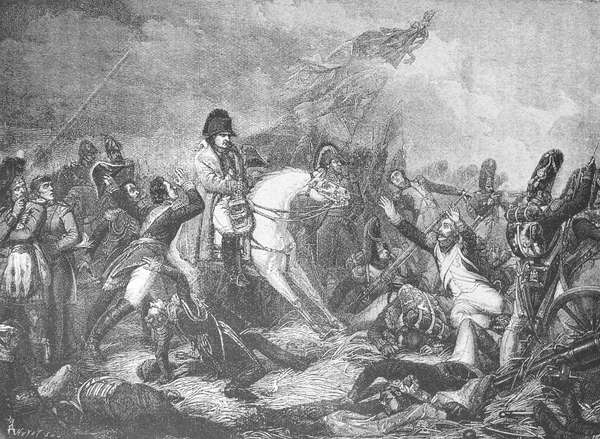
wowinside - stock.adobe.com - illustrative purposes only, not the actual person - pictured above is an illustration of Napoleon fighting at Waterloo

Human content, AI powered search.

Sign up for our lifestyle newsletter: relationships, romance and real stories, straight to your inbox.
Back in March of 1809, Napoleon Bonaparte sent a cryptic letter to one of his generals named Auguste de Marmont. The letter was written in code, except for the very first line, which was penned in French.
It detailed the positions of the allied and French armies through made-up symbols, numbers, and letters in the 24 lines that followed, but for 217 years, nobody could figure out exactly what it said.
Recently, Carter Church, an AI engineer, managed to get ChatGPT to decode it in only six hours. Working with OpenAI's GPT-6 Astra, Carter provided the image of Napoleon's cipher, along with just one prompt.
What's interesting is that Carter said he wasn't even curious about decoding Napoleon's cipher, but then he came across the story of Carter Leffen and how he was able to crack the code on a 1941 German Army Enigma message that had gone unsolved for decades. Carter also relied on GPT-6 Astra to assist him with this, and cracking that message took around 10 hours.
"Astra's multi-modal execution is what's actually impressive in this. The cipher itself isn't difficult, and cryptographers could have cracked this easily given the time/energy. But the work to transcribe, catalog, translate, then crack is involved and multi-disciplinary," Carter wrote on a post shared to X.
"Every field has an unsolved backlog of niche problems that specialists don't have the bandwidth to tackle. The takeaway here is that the people shortening those lists will increasingly be outsiders who were simply curious."
Circling back to the actual contents of Napoleon's letter, the Austrian Empire was already gearing up to go to war with Napoleon, and they invested years into standing up an army to fight against him when the time came.
Napoleon knew this was coming, so he had to contact Marmont, as he had his best soldiers and was over in what is now called Croatia.
From Paris, Napoleon crafted the letter and told Marmont that when he gave him the order to march, he shouldn't let himself "be intimidated by a few troops or a gathering of rabble."
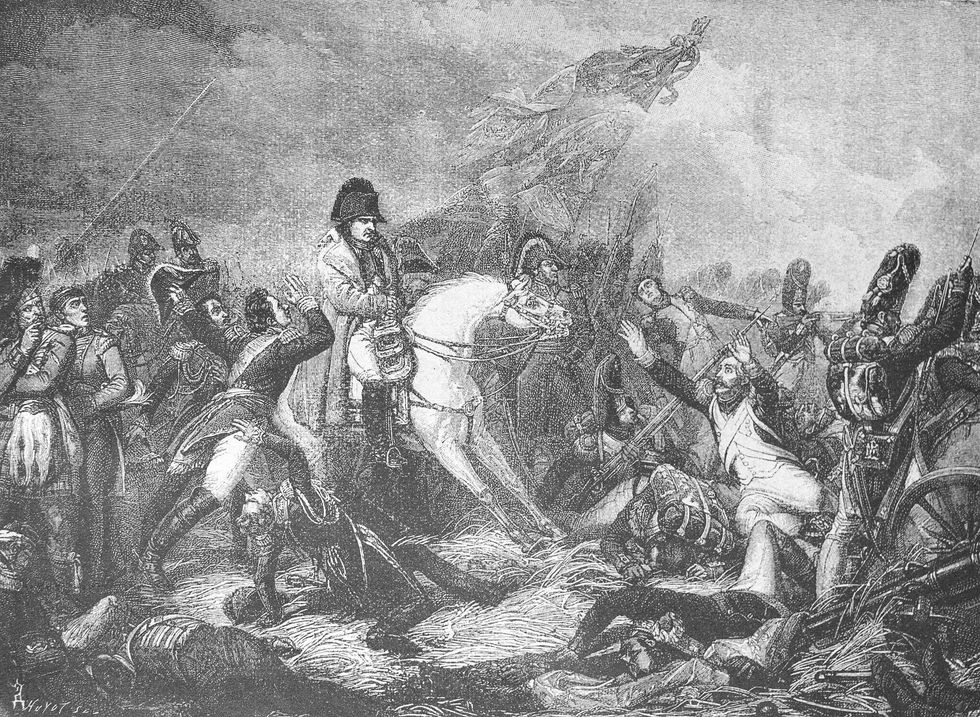 wowinside - stock.adobe.com - illustrative purposes only, not the actual person - pictured above is an illustration of Napoleon fighting at Waterloo
Marmont carried out the orders Napoleon put in the letter, and in the end, Napoleon and Marmont were victorious over Austria, winning the Battle of Wagram.
After the victory was secured, Marmont was promoted to a Marshal of the Empire. Ultimately, Marmont betrayed Napoleon as Allied armies closed in on them in Paris.
Marmont secretly negotiated with the commanders of those armies without Napoleon knowing, and made his 12,000 troops walk right into the middle of the enemy armies to surrender.
With nobody left to support him after more than 15 years in battle, there was no choice but for Napoleon to abdicate his throne. Napoleon had relied on these men to save France and his throne, but they all stabbed him right in the back.
You can view the entire write-up Carter created on how he cracked the cipher here.