ekaterina1922 - stock.adobe.com - illustrative purposes only, not the actual person - pictured above is a Victorian woman

Human content, AI powered search.

Sign up for our lifestyle newsletter: relationships, romance and real stories, straight to your inbox.
In the mid-1800s, tuberculosis had spread across Europe and the United States. The disease attacks the lungs and can damage other organs.
It is now known to be infectious. Back then, it was called consumption. Victims would slowly waste away. They would become pale and thin before finally dying.
The Victorians actually romanticized the disease. Being pale and thin was the beauty standard. Tuberculosis causes patients to have a lack of appetite and weight loss.
It also brought on sparkling eyes, rosy cheeks, and red lips, which were really just signs of a constant low-grade fever.
Tuberculosis became associated with respectable women. People looked at a woman's attractiveness to see how likely she would be to get the disease.
Middle- and upper-class women who did not have the disease would even try to emulate the consumptive appearance by using makeup to make their skin paler, color their cheeks, and redden their lips.
Additionally, pointed corsets and voluminous skirts became popular to emphasize women's narrow waists.
The idea of tuberculosis being fashionable can also be seen in art and literature from that time period. The protagonist of the 1850s opera, La Traviata, was the consumptive Violetta. The character was inspired by the French courtesan, Marie Duplessis, who died of tuberculosis in 1847 when she was 23 years old.
It wasn't until the 19th century that more information was discovered on tuberculosis. In 1882, Robert Koch discovered and isolated the bacteria that cause the disease.
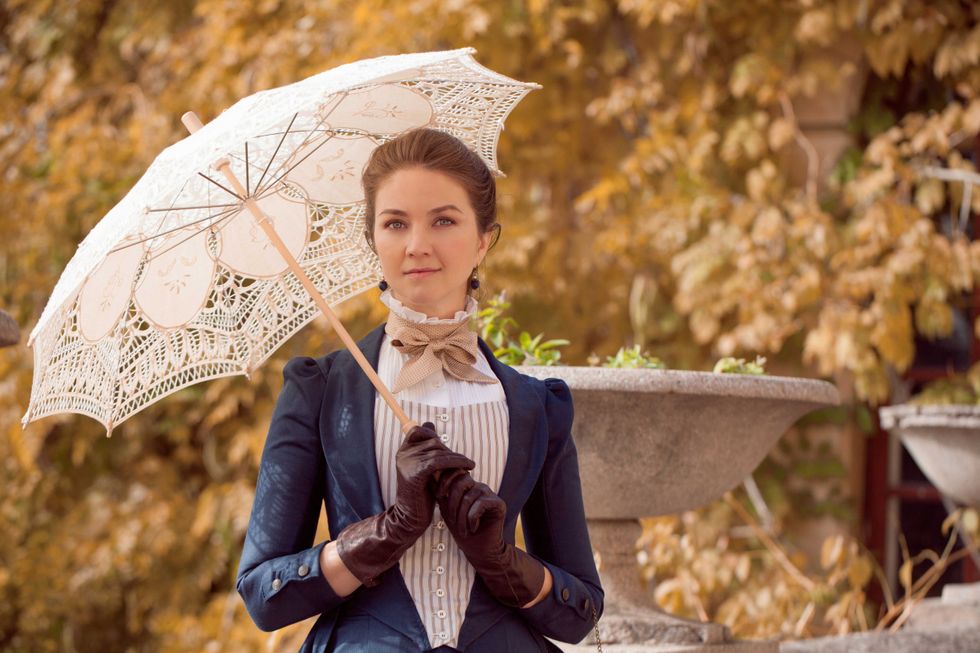 ekaterina1922 - stock.adobe.com - illustrative purposes only, not the actual person - pictured above is a Victorian woman
His theory helped germ theory establish credibility and convinced medical professionals that tuberculosis was contagious.
To prevent the spread of tuberculosis, the public needed to be educated on the disease. Women's fashions were targeted first. Doctors declared that long, trailing skirts swept up germs on the streets and brought disease into homes.
Furthermore, corsets were said to worsen tuberculosis by restricting the lungs and blood circulation throughout the body.
Men's fashion wasn't safe either. Facial hair was all the rage during the Victorian period, but by the 1900s, it was deemed a health risk, as it supposedly held all manner of germs and bacteria.
Eventually, "consumptive chic" fell out of favor, and tuberculosis became more connected to poorer classes. While the Victorian beauty standard of looking consumptive hasn't survived to the 21st century, modern society continues to see some lingering effects of the tuberculosis trend.
The concept of women being thin, fragile, delicate, sickly, and needing to be taken care of by men still exists in our society. The phenomenon of tanning also stems from tuberculosis. Around the 1900s, doctors began prescribing sunbathing as a treatment for tuberculosis. Tanning is still widespread today.
Lastly, coughing up blood was often a sign of the disease, and the coughing-blood trope that we see in TV and movies indicates that a character is about to die.
Sign up for Chip Chick's newsletter and get exclusive stories like this delivered to your inbox.