davit85 - stock.adobe.com - illustrative purposes only, not the actual children - pictured above are kids playing outside

Human content, AI powered search.

Sign up for our lifestyle newsletter: relationships, romance and real stories, straight to your inbox.
A couple in Scotland was walking their dogs on a beach when they stumbled across what looked like ancient human and animal footprints on the ground. Archaeologists had to race against time to study them before they were washed away.
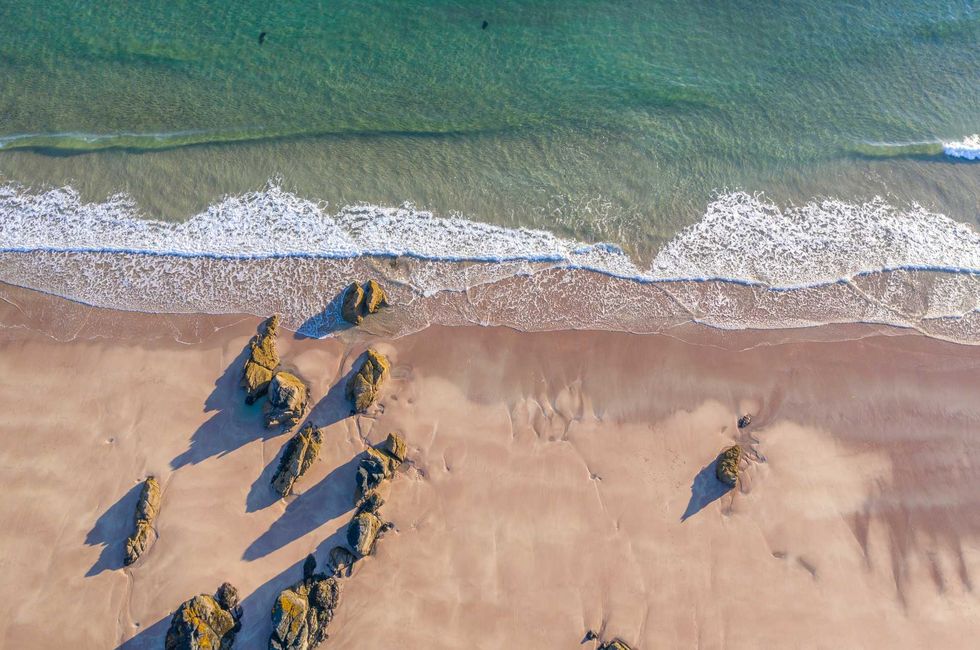
The couple, Ivor Campbell and Jenny Snedden, were walking their dogs, Ziggy and Juno, on the beach in Lunan Bay in eastern Scotland, when they spotted the prints. They reported the find to Bruce Mann, the Aberdeenshire council archaeologist.
A team of archaeologists worked diligently in wind gusts that reached up to 55 miles per hour. They used cameras and drones to document the prints as the tide slowly inched closer, eroding the site.
In the lab, they used 3D modeling software to record images of the site and created plaster molds of the best-preserved prints.
Barefoot humans and several animals, including red deer and roe deer, made the footprints. The team also found a layer of charred plant remains beneath the prints. They carbon-dated the plants to 2,000 years ago, during the late Iron Age.
"The late Iron Age dates are in keeping with what we know about the rich archaeology of nearby Lunan Valley," said Gordon Noble, an archaeologist at the University of Aberdeen.
"It's very exciting to think these prints were made by people around the time of the Roman invasions in Scotland and in the centuries leading up to the emergence of the Picts."
The Lunan Bay site is now a sandy beach, but the prints demonstrate that the landscape was once a muddy estuary that humans were likely using to hunt deer or collect wild plants.
A site like this in Scotland had never been seen before. The team spent two days excavating the site. When they returned a week later, the prints had disappeared.
 Eddie Cloud - stock.adobe.com - illustrative purposes only
Sign up for Chip Chick's newsletter and get stories like this delivered to your inbox.
"We knew we were dealing with a really rare site and that this discovery offered a unique snapshot in time, but it was also clear that the sea would soon take back what had so recently been revealed," said Kate Britton, an archaeologist at the University of Aberdeen.
In just a matter of days, this record of human activity thousands of years ago was destroyed. Even though the site was short-lived, it demonstrates the potential for the discovery and preservation of similar sites out there.
Overall, footprint findings are highly important because they can reveal more information about the people who left them, including their height, weight, age and walking speed.
Other examples of ancient footprints were found at White Sands National Park in New Mexico. They were made by children from the Ice Age who had jumped in muddy puddles.
Additionally, a set of 78,000-year-old footprints was left by Neanderthals in Portugal.