Andrey_Arkusha - stock.adobe.com - illustrative purposes only, not the actual person - pictured above is a woman in a white dress

Human content, AI powered search.

Sign up for our true crime newsletter and get the cases, confessions and mysteries everyone is talking about.
On April 10, 1998, 40-year-old Diane Augat went missing. That day, Diane was at her sister's house in Hudson, Florida. Her sister, Deborah, left in the morning to go to a doctor's appointment. When she returned, Diane was gone. Her disappearance is still a mystery.
Diane was born on February 21, 1958. She grew up in New York but ended up moving to Florida to be closer to her family. In the late 1970s, she married Frederic Augat, and they had three children together. She was described as a loving housewife who enjoyed camping, fishing, and music.
In the late 1980s, she was diagnosed with manic depressive disorder, which is now known as bipolar disorder. She began taking medication for her illness, but it was very infrequent, and her mental health declined.
In 1988, she allegedly committed child abuse by seeking out an excessive amount of unnecessary treatment for one of her kids. The charges against her were dismissed, but all three children were removed from her custody. Diane turned to drugs and alcohol. Eventually, she and Frederic divorced in 1991.
Over the next several years, Diane unraveled further. She was in and out of jail and mental health facilities. She even went missing multiple times, but only for a day or two.
Two weeks before her disappearance, she was released from an involuntary hold at a mental health facility. Afterward, she moved into her sister Deborah's home. She did not take her medication in the two weeks since her release.
On April 10, 1998, Deborah returned home from a doctor's appointment to find Diane missing. It is believed that Diane left the property at around 11 a.m. She did not have a car and likely hitchhiked out of the area.
A witness reported seeing Diane walking along the highway at around 3 or 4 p.m. The bartender at the Hay Loft Tavern also saw her. He said that she was intoxicated and walking around in circles, so he cut her off.
The next day, when Diane still hadn't returned, her mother, Mildred, reported her missing. Three days later, on April 14, a waitress saw Diane eating lunch.
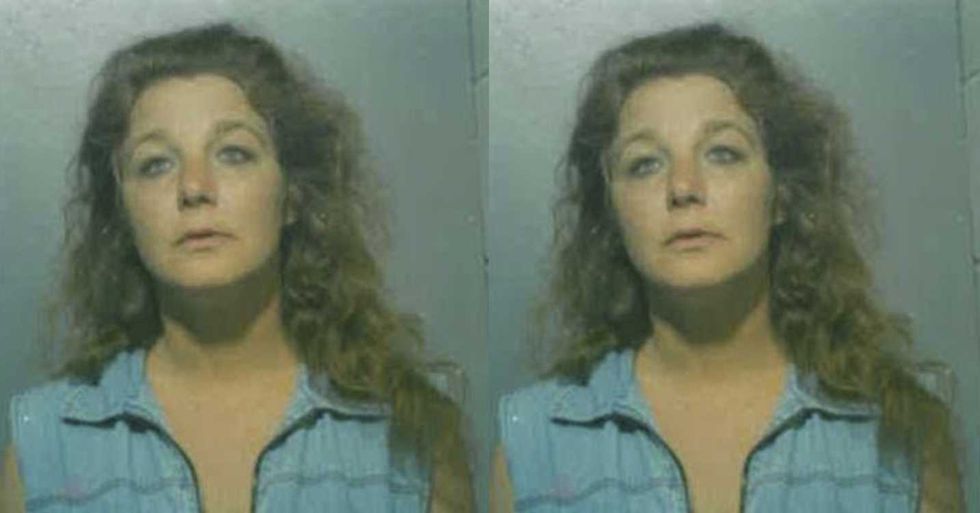 Pasco Sheriff's Office - pictured above is Diane
The restaurant was three miles from Deborah's house. The last sighting occurred one block from a motel, which was near the highway where Diane was seen walking.
On April 14, Mildred received a call while she was out. The caller left a voicemail message. In the message, Diane's voice could be heard screaming for help. There were sounds of scuffling as though another individual was trying to take the phone from her.
Diane then said, "Hey, give me that," before the call abruptly ended. Mildred immediately called the number back, but no one ever picked up the phone. Caller ID listed the name as "Starlight."
On April 15, a severed human finger was found on the side of the road at the location of one of Diane's last sightings. The day before, a woman was walking to work at around 4 p.m., when she came across what she thought was a toy or prop finger.
She did not stop to examine it more closely. She later mentioned it to her boyfriend, who went to check it out the next day.
When he realized the finger was real, he called the police. The finger was part of a right middle finger, and the nail was painted with red polish. Authorities confirmed that the finger belonged to Diane. They searched the area, but found no other trace of her.
On April 18, her home in Odessa, Florida, was looted. The police believed that local youths were the culprits because Diane was known to let people throw parties at her home. That same day, the manager of a convenience store in Odessa discovered a bag of neatly folded clothes in the outdoor freezer.
Diane often visited the store, so the manager called Deborah to ask if the clothing belonged to Diane because it looked familiar. Deborah confirmed that she had given the clothing to Diane. The last time the manager had checked the freezer was three weeks ago.
Only one suspect in Diane's case was ever publicly named: Gary Robert Evers. The police never made a statement about how he was connected to her disappearance, only that he had long been a suspect.
In 2000, he was arrested after confronting and killing a man he believed to be responsible for an attempted robbery at the motel he co-managed.
The motel was the same one where Diane was last seen. It turned out to be a case of mistaken identity, and the man he killed was not part of the robbery.
He was never charged in relation to Diane's disappearance and passed away in 2012. To this day, Diane remains missing, and there have been no significant updates in her case.
If true crime defines your free time, this is for you: join Chip Chick’s True Crime Tribe