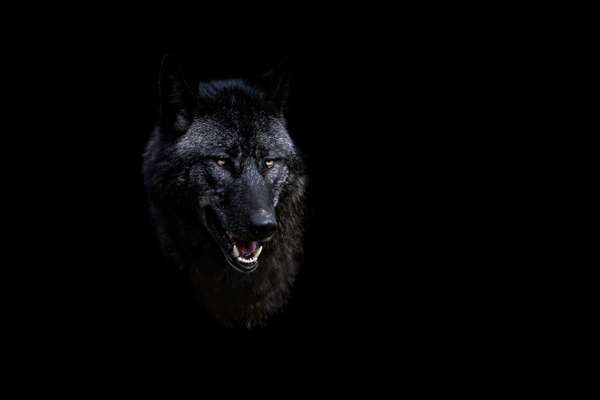
AB Photography - stock.adobe.com - illustrative purposes only - pictured above is a black wolf

Human content, AI powered search.

Sign up for our lifestyle newsletter: relationships, romance and real stories, straight to your inbox.
In 1971, a pair of small stone heads was found in the English town of Hexham. They were about the size of tennis balls and were crudely carved to resemble a masculine head and a feminine head.
They were named the Hexham Heads, and they soon became closely associated with paranormal activity. To this day, it is unclear where the heads came from.
Two boys named Colin and Leslie Robson dug up the heads in their garden one day. Afterward, the Robson family reported strange activity in their home.
The heads were allegedly moved around when no one was in the room, and bottles mysteriously threw themselves against walls without anyone touching them.
Then, the Robsons' next-door neighbors, the Dodd family, claimed that a half-man, half-sheep creature left their house in the middle of the night shortly after one of the boys' hair was pulled.
The mother and daughter also saw a wolf-man burst into their room, look around, and quickly run away.
The Robsons gave the Hexham heads to Dr. Anne Ross, an expert in Celtic artifacts and mysticism. Soon, the Ross family began experiencing strange activity.
Dr. Ross herself woke up one morning and saw a half-man, half-wolf creature standing at the end of her bed. She followed it downstairs, but somehow lost track of it.
The Ross family continued witnessing the creature in their home at various times. They also felt random cold spots and saw doors open spontaneously.
 AB Photography - stock.adobe.com - illustrative purposes only - pictured above is a black wolf
Dr. Ross believed that the Hexham heads were behind all the bizarre sightings. So, she removed the artifacts from her house, and the activity stopped right away.
The Hexham heads were donated to the British Museum and put on display. However, the exhibit was quickly taken down because several museum workers witnessed dark figures and wolf-like creatures near the exhibit. When the heads were removed from display, the sightings stopped.
After the public became aware of the occurrences at the museum, a man named Desmond Craigie came forward to say that he created the heads in 1956 as a gift for his daughter while he was living in what is now the Robson house.
There was also a third head, but it suffered damage and had to be thrown away.
Craigie worked at a concrete company, so he created some replicas to support his claim. But the replicas were nothing like the original Hexham heads.
Professor Dearman from the University of Newcastle analyzed the heads and came to the conclusion that they had been molded artificially instead of carved. The University of Southampton disputed his findings.
The heads were placed in storage and subsequently lost. Their current whereabouts are a mystery, but rumor has it that they were purchased by a collector.
Sign up for Chip Chick's newsletter and get exclusive stories like this delivered to your inbox.